Uncategorized

Why Walking Matters Now More Than Ever

etienne-delorieux-zaCC6y4hjCw-unsplash(1)

Photo by Etienne Delorieux on Unsplash

Building a life that works for you, not only includes the broader strokes — where you live, where you work, your family unit — but the nuances that round out the entire picture. With all that is going on around us. we can easily neglect the part of our world, where we have a moment to reflect and process. In these times — even though we may be venturing out less, overload remains a real and present concern. This makes “process time” even more important.

I’m reminded of a fascinating post (more on the book Daily Rituals here) discussing how some of the most incredible individuals of the last 400 years spent their time. While their areas of expertise were varied and remarkable, there was one obvious link among many of them: From Milton to Tchaikovsky, many set aside time for a daily walk.

Some ventured alone. One with family.

Walks rock.

Here are a few of the benefits:

  • Digestion. I’m not referring to gastronomy — I’m referring to the all of the information you’ve consumed over the course of the day. It’s difficult to process or notice patterns, when your brain isn’t allowed the time to do so.
  • Fresh air. I love home my office, but a change of scenery does help me feel rested and refreshed. I may not have access to a beach or a handy mountain range to view, as some of my colleagues. But the breeze is just as refreshing here in the mid-west —  and the birds just as vocal.
  • Lowered anxiety. With our current lives, comes our unshakable friend — anxiety. Physical exercise has great way of managing this nagging by-product of uncertainty.
  • Digital reprieve. Not sure how much time you must spend in front of a computer, but the changes in our work lives, have upped our screen time significantly. Balancing this is vital.

Commit just 15 minutes each day to get out and walk.

Observe the birds. Track the progress of the budding trees or your neighbor’s front garden. Feel the breeze.

You can also take a tip from Mozart and keep paper and pencil handy. You never know when inspiration will strike you.

Write me here and let me know what happens.

Want the book? Just click on the visual.

Live.Work.Think.Play shares observations concerning a wide array of topics from founding a company — to the perfect office gift. It is designed to share lessons learned from a variety of perspectives.


Uncategorized

How Work (and Other Things) Might Help Us Cope Right Now.

cathal-mac-an-bheatha-cvRKmOp_fl4-unsplash

It is 2020.

We are all struggling to establish a new normal, in times that are anything but normal. I’ll spare you and will refrain from sharing advice about how to work remotely. We are in the midst of history being written. That alone demands that we peel away the layers of the onion.

Many of us simply want to protect ourselves, our families and quite possibly our well-being. Know that psychological resources such as hope, self efficacy and resilience, can be adversely affected as we practice social distancing.

As an alternative track, I’ll share few thoughts on how to stay on a somewhat even keel. (Disclaimer: These are my own. They do not have to be yours.) Not surprisingly, this does include work and seeking a daily measure of joy. Know that I am referring to the type of work, that feeds your soul and occupies your mind. I am also referring to the trusted elements of our lives to which we turn, when feeling unsettled.

What to try now:

  • If possible, continue to do the work you love to do. I’ve just listened to Coldplay’s Chris Martin live streaming an impromptu home-based concert at Instagram (@Coldplay). As a psychologist, I’m thankful that he can continue to share his gift to help others. Try to do the same. Work on topics that bring meaning & value to you.
  • Reach out. Limit feelings of isolation & distance. Technology can obviously work with us here. I couldn’t love Zoom more than I do today, in this very moment. I intend to contact the clients & colleagues, I’ve come to respect over the years. Utilize Facebook video to call friends who are alone (quite reliable) and text your neighbors. I’m hoping this helps in some way.
  • “Lean in” to the things that bring joy. Whether this is music, film, reading, art, walking, observing birds, podcasts, comedy, singing, blogging, or crafting. Do these things when you have a moment. James Altucher just shared his reading list as we self-isolate. Shuttered Broadway performers are singing for us. Museums have shared virtual tours. Improvise. Build these into your daily routine.
  • Complete something. Anything. When we cannot control our circumstances, self-efficacy suffers. This can lead to feelings of helplessness. While you distance, complete smaller projects/tasks that you can pace. Bring feelings of mastery into your “new normal”.

We are all struggling. Share your concerns to someone that you trust.

What are you doing right now to support your psychological foundation?

Dr. Marla Gottschalk is an Industrial & Organizational Psychologist. Live.Work.Think.Play shares observations concerning a wide array of topics from founding a company — to the perfect office gift. It is designed to share lessons learned from a variety of perspectives.

Uncategorized

10 Stirring Quotes We’re Turning to Right Now

woman in white and brown floral dress
Photo by Maksim Goncharenok on Pexels.com

I’m not usually a list person. Or a quote person. Or a “jump on the bandwagon” person.
Yet, these are extraordinary times — and I seem to be becoming all of these things.
I suppose that different times, create different needs.

You (and possibly your team), may also require more support to tackle the day with positivity & fortitude. A dose of guidance, from those who you have been through it all, might help us.

So, here goes.
A few quotes of the moment. One from yours truly, at the closing.

  1. Do what you can, with what you have, where you are. –  Teddy Roosevelt
  2. Difficulties mastered are opportunities won. – Winston Churchill
  3. The best way out, is always through. – Robert Frost
  4. From caring, comes courage. – Lao Tzu
  5. There is nothing like staying home for real comfort. – Jane Austen
  6. Attempt the impossible to improve your work. – Bette Davis
  7. Wherever a man turns, he can find someone who needs him. – Albert Schweitzer
  8. The true sign of intelligence is not knowledge, but imagination. – Albert Einstein
  9. If you are going through hell, keep going. – Winston Churchill
  10. Thinking will not overcome fear, but action can. – W. Clement Stone

While our lives may have increasing boundaries —
our minds remain infinite.

Share your stirring favorite in comments.

Live.Work.Think.Play shares observations concerning a wide array of topics from founding a company — to the perfect office gift. It is designed to share lessons learned from a variety of perspectives.

Uncategorized

Three Reads: Our Weekly Picks

stefan-stefancik-297983-unsplash

Feel the need to read? We’re adding a weekly feature at Live.Work.Think.Play. With so many interesting posts across the web — we felt the need to share what we’ve been reading. Staying true to our mission to expand your perspective, you’ll find the article titles are quite varied. Some titles will be newly published, others newly discovered.

Enjoy.

Do you like this feature? Tell us how we’re doing in comments.

  • How to Do Nothing, Jenny Odell at Medium. You might feel like you are falling into the proverbial rabbit hole with this one, but stick with it and follow Ms. Odell on this remarkable journey. (Take this post in stages.) Like a slow burn — you’ll won’t even realize that something has awakened within you.
  • Seven Rules for Working at a Coffee Shop, (Put this one on hold.) Brenna Houck at Eater. Picking up my daily coffee, I often pass by the “regulars” who set up shop at the shop. Yet, I never think about what are doing, to earn their right to stay. If you have any doubts about that exchange relationship — this might help you learn the ropes.
  • How to Move From Self-Awareness to Self-Improvement, Jennifer Porter at Harvard Business Review. When it comes down to it, change requires more than being aware — you have to actually change your behavior. Some great ideas to get there.

Live.Work.Think.Play shares observations concerning a wide array of topics from founding a company — to the perfect office gift. It is designed to share lessons learned from a variety of perspectives.

Uncategorized

I’m Worried About a Belief Manifesting. Here Are the Reasons Why.

freshh-connection-V3BRb9qrvDs-unsplash

I’m all in for a great idea that might help us move forward. But rest assured, I’ll put that idea through its paces. We should all take a closer look — breaking things down and exploring how it all works. Where the philosophy of manifesting is concerned, I completely understand its allure. In a sea of self-care trends, it does appear to embrace positivity (let’s be sure not confuse it with mindfulness). Yet, I fear that while it purports to offer many a supportive path when life and work throw become challenging, it falls miserably short in the proof department. Here are my concerns with manifesting — and you may or may not agree with my reasoning. (Read more here.)

Problem #1. For an idea to hold water, “the proof” so to speak “lies in the pudding.” To truly improve our lives I believe that “doing” — actual behavioral change is necessary.  Thoughts may be the starting point to change. Yet thoughts never represent the complete story when it comes to forward progress. We cannot wish for things to develop. We have to act. Without a plan of action, only false hope can follow.
We must act to change our lives. Only our behaviors can truly accomplish this.

Problem #2. Let’s consider the underlying premise of manifesting. When our thoughts are unleashed into the universe, these thoughts somehow create more of the same energy. Logically, this leads me to ask questions such as: “Will my thoughts concerning my difficult client, bring more of the same toward me?” or “Did my friend ghost me because my vibrational energy was low and broadcasted my doubts?” Essentially, this line of reasoning implies that whatever you put out there thought-wise, the universe magically (and inexplicably) slaps it back into your face.
Manifesting shifts our intentions into the great unknown. It professes control, but actually hands off that control to an entity outside of ourselves.

Problem #3. Let’s consider, what all of this implies about any emotions that are not positive. Are we also saying that negative feelings are worthless, that they should be stomped out entirely and ignored? I hold the firm belief that our emotions tell us something. That our sometimes nagging “inner-speak” is alerting us to the work that needs to be done — and this work bring our lives into alignment.
We can acknowledge what is wrong, yet challenge our situation to improve it.

Weighing in on the side of manifesting, I do know that hope matters. Hope leads us to try again and again, to reach for the goals that matter to us. However, while we might fulfill the “hope criterion” with manifesting, we must also take things one step further and build self-efficacy through deliberate action.

Manifest that.

Dr. Marla Gottschalk is an Industrial/Organizational Psychologist. She is a charter member of the LinkedIn Influencer Program. Her thoughts on work life have appeared in various outlets including Talent Zoo, Forbes, Quartz and The Huffington Post.


Uncategorized

Why a Garden is Your Self-Care Champion

veronica-reverse-qYwyRF9u-uo-unsplash
Photo by Veronica Reverse on Unsplash

The previous owner of my home — “the gardener” as I call her — clearly possessed a passion for the art of the plant. At every phase of the growing season, there are at least two specimens in bloom. The choreography begins early in spring with rows of fuchsia-hued bleeding hearts and extends into the fall with numerous Rose of Sharon trees and sedum plants. I suspect that some of the plantings are quite old (the house was built in 1948), yet many seem to be recent additions. When we first stood in its muddy, quiet wake 4 years ago, something told us that there was a beautiful story about to unfold and it did not disappoint us.

20190519_131822
One of the first springtime arrivals.

If you’ve personally spent time in a garden, you may know of its power to calm you. You may have also noticed that it doesn’t take long for something peculiar to happen. As you dig — or sit or simply admire the blooms — your mind begins to shift and your muscles begin to relax.

With self care emerging as the antidote to our congested lives, horticulture arrives as a super-hero to save us.

At The Verge, author Lewis Gorden shares the burgeoning field of video games attempting to capture the magic of gardening. Personally, I’m not surprised. When it comes to resetting our minds, no place on earth beats the vibe of a tranquil green space. But, not all of us have a garden handy. As luck would have it, you can now visit them virtually. One lovely option, Rosa’s Garden allows you to immerse yourself in the calming sights and sounds of a garden.

“Rosa’s Garden is a calm and poetic flower game about gardening with roses. Dig little holes in the ground, find seeds, plant them and watch how slowly a rose grows. ” – charlottemadelon.com

In a world where we are bombarded with memes and messages, finding a place of refuge to turn down the volume and slow things down is vital. Nature, of course, is a healer which can affect mind, body and soul. Why and how this happens has been the focus of research for years. The essence of this dynamic seems to rest with how our brains process stimuli. This phenomenon was addressed by one of the founders of psychology William James. As discussed in this Atlantic article, James felt that there were two kinds of attention: directed and involuntary. Direct attention required us to focus (even reading this post requites this)  — involuntary attention is passive. The stimuli can be absorbed with little minimal effort.

The multi-layered experience of a garden, is one that is simply absorbed.

So, plant a flower or two in your own dirt or find a local garden near you. Grab someone to take along to share the experience. Be sure to sit for a time, to ensure that you notice the birds and the breeze.

Or simply download Rosa’s Garden.

The choice is yours.

More on the psychology of gardening here:

Live.Work.Think.Play shares observations concerning a wide array of topics from founding a company — to the perfect gift. It is designed to share lessons learned from a variety of perspectives.

Uncategorized

What You Need to Know About Yourself to Help You With Change

StressatWork2

The wind of change, whatever it is, blows most freely through an open mind. — Katharine Whitehorn

I’ve been told more than once that I’m not an ideal role model concerning change. (To be candid the characterization is absolutely correct.) I tend to balk at the mere whiff of a change — holding on to hope that it won’t ever come to pass. Then adjusting my course will not be necessary. Honestly, this can be a problem.

As you may have read in this post, I’ve been known struggle with even the smallest of changes, muddling along until the “new normal” finally appears. Until that moment, I feel somewhat annoyed and completely out of sync. For better or worse, my “go to” reaction is to delay a change until I can carefully consider every aspect of the situation. Unfortunately, holding time at bay isn’t always an option.

All things aside, I firmly acknowledge the value of flexing our workplace “change muscles”. Yet, knowing ourselves is likely the very first place to look when building these muscles. We all have a leading predisposition when faced with change, which likely represents our collected experiences and given temperament. Of course, this will influence our orientation and initial reaction to change, as well.

This is where things get tricky. (If you manage others, reflect on what this may mean for your team.) We need understand and accept our own tendencies and recognize how this may affect our response.

As a professional who advocates for needed change — here are a few of the predispositions which I’ve observed over the years:

  • Piners or Grievers. These individuals lament the coming of change, even when it is inevitable or necessary. They may grieve for the roles, policies, procedures and co-workers of days gone by. They do move on eventually — but often with decreased fulfillment, satisfaction and a measure of sadness.
  • Researchers. An unbridled need to gather information is the leading response for this group — as examining the issue from all angles often helps them move forward. Unfortunately, a leading by-product is “analysis paralysis”. Another issue: time may not be a negotiable. (This would be where I fall, although I pine at the start.)
  • Supporters or Embracers. These individuals are generally open to change and feel excited to contemplate the future. They may not be the primary driver of that change, yet are happy to see the possibilities and help things move forward.
  • Alarmists. For these individuals an impending change triggers intense feelings of urgency. This could lead to premature or risky career behaviors that negatively affect them longer-term. (Such as quitting on a whim, etc.)
  • Dreamers. This group always manages to see the best in the current situation, even when there is overwhelming evidence to move on and accept some kind of change. (I would add there is a mild level of complacency operating here). Because of this perspective, they might miss opportunities to properly plan a place for themselves in the new “order” of things.
  • Observers. Usually quiet and calm, these individuals take a solid “wait and see” approach. They rarely panic — and prefer to watch things unfold organically. They might superficially support the change, but may eventually exit if the change eventually is perceived as negative.
  • Aggressors or Terminators. These individuals feel anger when they are faced with an unexpected change. They may become a strong “naysayer”, vehemently opposing a change and could exhibit negative behaviors without reflection.

After drafting these, I searched for other frameworks that capture how we process change. I happened upon the Kubler-Ross Change Curve, which applies the seminal model of Elisabeth Kubler-Ross concerning grief, to change efforts within organizations. (This theory states that we all move through specified phases when dealing with change, rather than identifying a leading emotion that we deal with over time.) I thought it wise to mention it here.

Where do you fall? Have I missed your leading orientation toward change? Share your style in comments.

Dr. Marla Gottschalk is an Industrial & Organizational Psychologist. A charter member of the LinkedIn Influencer Program, her posts on workplace topics have appeared at Harvard Business Review, The Huffington Post, US News & World Report and The World Economic Forum.

Uncategorized

Your Network Isn’t Working For You. Here’s What to Do About It.

daria-shevtsova-57340-unsplash

Recently, I’ve been writing (and revising) my work life manifesto — which attempts to distill my thoughts and guiding principles concerning how I approach work life. (More on this later.) One key principle, which survives every cut — addresses the notion that the people that surround and support us. Whether these individuals share our physical work environment or are connected virtually, doesn’t matter. It is the contribution to work life progress that is the criterion.

The Ugly Side of Networks
We’ve all heard the advice that we require a broad network. That we should build one — and faithfully utilize one. However, what if you realize that you indeed have a network, but it is not helping you move forward? (At least not in the manner that would be meaningful to your work or work life, in this very moment.) What if that network is not supplying what you need to stay strong, to stay focused and motivated?

The difference likely lies in the notion of a network vs. a community.

You see a network isn’t a community. It’s a Rolodex.

You may need to re-visit that network, tear it down and rebuild a community in which you might thrive.

There are elements that might alert you to a need for some quick changes. More specifically — that you need to bring elements of community to your network.
Here are a just few:

  • You aren’t discussing ideas — at least not in a way that matters. Remember that your community should provide resources to help you actually digest your ideas and sort out how they can develop. If that this is missing, make no mistake, you are losing.
  • Interactions are less than reciprocal. Social media makes connecting very, very easy — but there is a downside. Connections do not equal forward progress. If you’ve discovered that most of your network is happy to use your time and support, but haven’t really returned in kind, it’s time for an audit. (Beware of Remora fish.)
  • You no longer believe in them. If you have “lost that loving feeling” and no longer want to share someone’s message (you detect insincerity or purely self-serving goals), consider a replacement. If you are longer invested in their “brand”, lose them. You’ll likely not trust their opinions.
  • They no longer believe in you. This is the real deal-breaker. It is imperative that you surround yourself with those that feel you have something to offer. (Please don’t confuse this with honest critiques). If you sense this is a core issue, shuffle them out of your line-up.

Anything else to add? How have you built a strong community to support your work life?

Dr. Marla Gottschalk is an Industrial/Organizational Psychologist. She is a charter member of the LinkedIn Influencer Program. Her thoughts on work life have appeared in various outlets including Talent Zoo, Forbes, Quartz and The Huffington Post.


Uncategorized

Want To Be More Creative? Here’s a Plan That Really Works

tanialee-gonzalez-698417-unsplash(1)
Photo by tanialee gonzalez on Unsplash

“It is my belief, you see, that thinking is a double phenomenon like breathing.” – Asimov

If you have watched the classic television series House, you’ll find that every medical mystery is solved in the most unusual of moments. Without fail, House’s uncanny ability to problem solve kicks in while he sits in the hospital cafeteria, is mid-sentence while talking to a team member or when he doesn’t outwardly appear to be focusing on the problem on deck.

It is very intriguing to watch.

But, we shouldn’t be surprised as to why this happens.

You see, our brains function in curious ways.

Your Brain Revealed
In the classic essay The Eureka Phenomena  (1971), Issac Asimov explores why these moments of inspiration occur when we least expect them. Asimov’s theory is quite simple, posing the notion that thought includes both voluntary and involuntary components. Moreover, opportunities for both types of thought must be present to become highly effective. Essentially, we can be thinking about one thing on the surface, yet ruminating on another topic below — the involuntary part of the equation.

The Eureka Phenomena sheds an interesting light on how we might become more effective in the workplace. As we all have experienced, if you are focusing too long and too intently on one topic or issue, you can be unsuccessful. Asimov would say that involuntary thought was not allowed to flourish and that contributed to the failure.

He recollects that when he was in the midst of a problem he could not solve, he shifted his focus and “shuffled” off to the movies. This action ultimately, allowed him to work through his challenge. He also tells the story of Archimedes — and how a visit to the public baths helped him to discover the concept of volume.

Of course, you may find that taking a walk or baking does the trick, but the process is of no less importance. You must give your brain the “down time” it needs to succeed.

Office Life and Involuntary Thought
There are millions of individuals who have the responsibility to process information concerning people, places and things for a living. Many attempt to accomplish this in an office environment. Of course, working in a traditional office does have merit. There are opportunities for collaboration and serendipity — yet obstacles to productivity abound. As discussed by Jason Fried in his classic Ted Talk, many aspects of office life (such as interruptions), can prove to be huge offenders, curtailing deep, meaningful thought.

During the course of a typical office work day, an individual may complete a multitude of activities and appear outwardly productive. However their brain power may not be maximized, as there are few opportunities to rest, reflect and digest information.

The Eureka Phenomena Applied
You must remember that while thought doesn’t require physical output, your brain is still hard at work. So, while you may not perceive that you are fatigued, your brain may actually be exhausted. As studies have shown, allowing the brain time to rest is critical. In this way, the brain finds the fuel it needs, so that energy can be funneled to the involuntary mechanisms that promote deeper thought. If we can learn anything from Asimov — it is that the brain cannot be bullied into becoming effective. It must be respected and nurtured.

Be mindful to offer your mind a bit of rest and identify those activities which help your brain relax and build them into your day.

Ultimately — don’t feel guilty if you feel the need to “shuffle off” to the movies. Your brain will thank you.

Live.Work.Think.Play shares observations concerning a wide array of topics. It is designed to share lessons learned from a variety of perspectives.

Uncategorized

Need a Gift for Someone at Work? We’ve Got a Few Classic Ideas

michal-pechardo-480733-unsplash

It is the season of indecision, in a year of tumultuous adjustments. You may be wondering — would an office gift be inappropriate this year? Well, we’ve tossed this around and here is what we came up with: If your heart is in, do it.

Celebrating the people in your work life that matter is never wrong. In fact, we can’t help but wonder if a thoughtful gift has more meaning than ever before.

How often have you thought of someone you would like to thank, yet you never mustered the motivation to follow through and find the right gift? This may be the right time to finally offer that heartfelt thank you, in a year where we’ve really needed to depend on each other for guidance and support.

We’ve been thinking about all of this decided to go a bit retro. We’ve settled on a few classic ideas which are not only nifty gifts, but are likely to be used or enjoyed, during the coming year.

Here we go.

The Multi-Use Tote
I don’t know about you, but most of us appreciate a practical holiday gift. I personally received this great gift from Maptote a couple of years ago — and I’ve used it frequently (currently sidelined of course, it is holding ribbons in my pantry). Maptote offers clever, destination-based tote bags for a variety of cities and states (they have other items as well). This option is not only a worthy contender, it has some retro flare to boot. Apolis, another great brand also makes market totes — with inspirational sayings helping to make a statement. The “Peace” Market Bag, was given to me as a gift recently and I love it.

Market_Manhattan_WebPhoto: Maptote

The Coffee Table Book.
I received Ocean Worlds, by Jacque Cousteau as a holiday gift from my first employer. (All 160 of us received the same book, sitting wrapped on our desks and this became a highly anticipated tradition.) The books I received during my tenure there, still sit on my coffee table offering hours of enjoyment. One suggestion is below — but there are so many fascinating options at various price points. (Click on the photo for more information.)*

Flowers (and Flower Subscriptions)
In this part of the US, winter are long and lacking in sunshine. The idea of a bouquet of flowers — couldn’t be more appealing, as waiting until early spring to see another bloom is just too long. A subscription service takes this to the next level. (In Britain they call these Letterbox Flowers.) Find my favorite London-based florist Highgate Flowers and subscription options here.) You can explore US options at any of these florists: Farmgirl Flowers, Bloomsy Box & The Bouq.

syzthabd6byjxscfdqwk

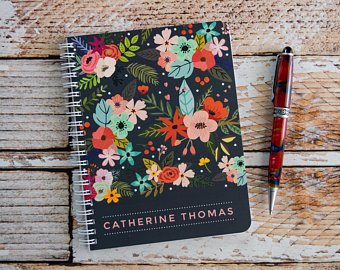
The Classic Notebook.
Ah… the notebook! Somehow when a notebook presents itself, it calls out to our creative side. Offering one as a thoughtful gift, shares the promise of new ideas and future observations. (Da Vinci couldn’t have been wrong, so we are following his lead.) The variety of choices are endless. We’ve chosen a couple of options below.

Rhodia Lined Notebook* – 5.5 x 8.5 – Fountain-pen friendly. Rhodia offers some colorful options as well. (Click on the photo for more information.)*

Find colorful options from Etsy by clicking here.

NotebookEtsy

The Not So Classic Pen.
Sooner or later you have to ditch the keyboard and actually write by hand. These pens from Retro 1951 & Rifle Paper Co. roller ball pens are a stylish alternative and made our list! Find them here & here.

RollerBallPenPhoto: Rifle Paper Co.

The Tornado Vintage Blacksmith Roosevelt Pen is a also stylish, retro choice. (Click on the photo for more information.)*

Happy Holidays!

Live.Work.Think.Play shares observations concerning a wide array of topics. It is designed to share lessons learned from a variety of perspectives.

*LiveWorkThinkPlaycom is an affiliate of both Amazon & Awin — Etsy’s linking partner. That means if you click on the link and purchase the item, we receive a small commission. We only recommend products that we believe bring value to our readers.