Uncategorized

Didn’t Take That Vacation? Here’s What Might Happen

Mackinac
The Grand Hotel – Mackinac Island

We didn’t have the opportunity to take a vacation this summer.

For some reason, the stars just didn’t align.

A few things contributed to the situation. I have a new role (along with my other commitments) and we are also renovating an older home. (As you might expect, our resources have been diverted to goals such as staircases and a functional HVAC system.) Then we just couldn’t agree on when and where to go.

“Re-charging” just was not in the cards.

The outcome of this neglect feels very real. A little like pulling an all-nighter — with no desire to sit for the exam.

The research has shown that many of us fail to take time off, even when we have earned vacation days to do so. For some odd reason, we don’t like to admit that time off is necessary — or we fear we’ll look weak — or uncommitted to our work. This lack of attention to rest, is costly in so many ways. I can only say, that if I’m representative of what it is like to not have a break, no one should skimp.

Sustaining “us” — is in part our own responsibility. We shouldn’t need to be reminded that we are important.

Here’s what has happened:

  • I’m observing signs of burn-out. Yes, I lack my usual level of enthusiasm for the tasks I normally love. I’ve resorted to coaching myself to care, as the “Joy Factor” has taken a dip. That’s a sad commentary.
  • I’m losing my sense of humor, especially where work is concerned. I don’t laugh nearly enough — and laughing is vastly under-rated. We need these moments to off-set stress.
  • I’m a bit of a pain in the a##. I’m sure it has to do with the above. No further explanation needed. Sorry for the implied language.
  • Inspiration is waning. In my role new sources of stimulation helpful to stay at the top of my game. A change of scenery always does great things for me. We really shouldn’t expect to be at our best, after completing a year-long “Stay focused” marathon.
  • I’m starting to fantasize about a new career. Many of us take these feelings as a sign that our role is the problem. It’s likely not.

Here is what I’m doing:

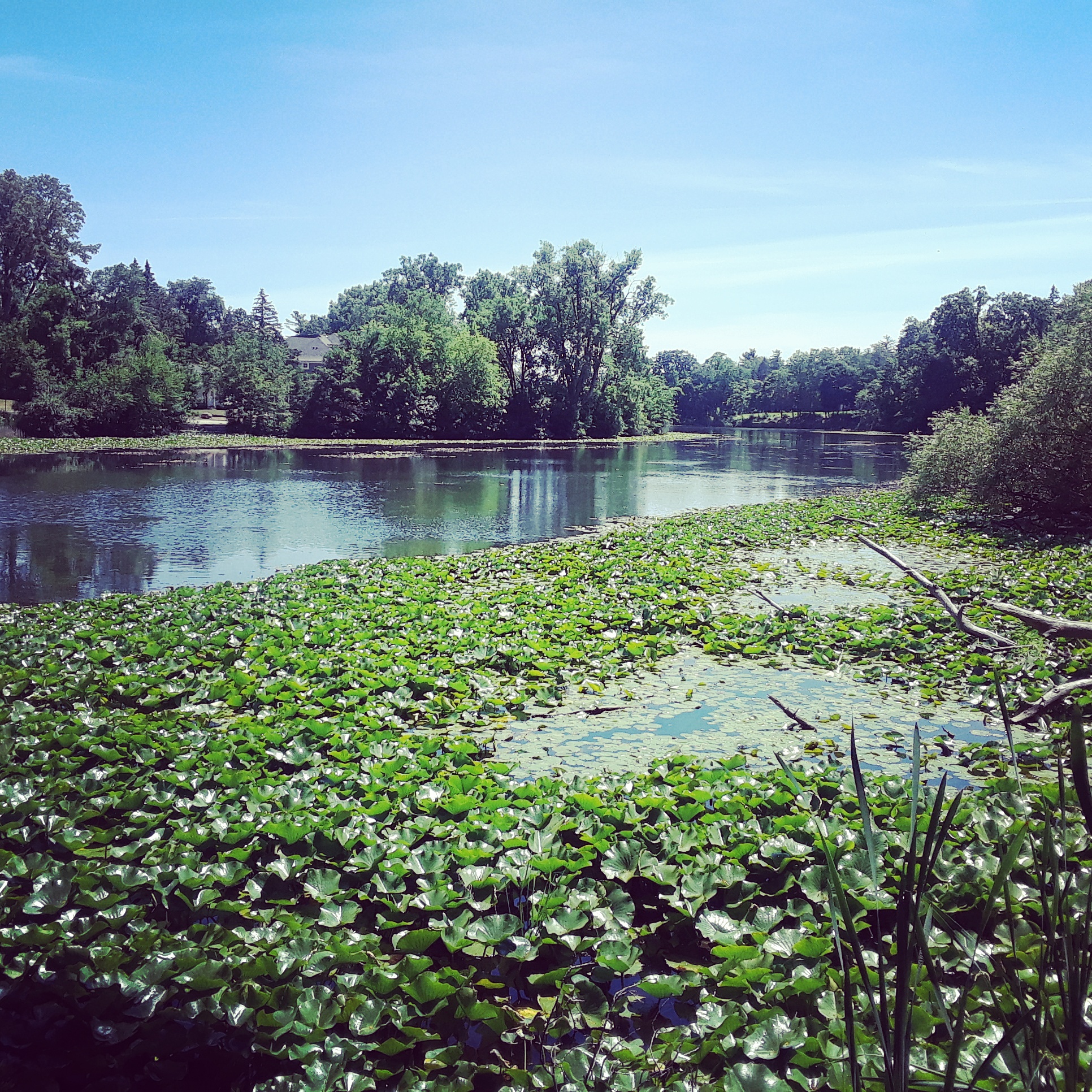
  • I’m exploring my local environment. I’m unchaining myself from my desk and getting out there (cell phone muted). I’m stopping by the Farmer’s Market, and checking out the museums and gardens (See examples here and here). Inspiration is really all around us.
  • I’m aiming to meet more people face-to-face.  I’m completely inspired by the career journeys of others. I’m making a point to visit college campuses this fall, to talk to students about their future work lives. (let me know if you’d like me to visit yours.)
  • I’m exploring a series of shorter weekend trips. Nothing works like the real deal. Michigan is beautiful in the fall and I’m determined to see it.
  • I’m telling founders, managers and leaders to take their vacations (and to let everyone know.) Nothing cements a needed change more completely, than a strong message that time off is a respected practice.

You still have time to schedule that break.

Do it.

What are your strategies to take a break when vacations are impossible to schedule? Share your thoughts.

Read more about it:

This post was originally posted at The Office Blend.

Live.Work.Think.Play shares observations concerning a wide array of topics from running a company — to the perfect fragrance. It is designed to share lessons learned from a variety of perspectives.

Uncategorized

Time For a Playlist About Building Your Personal Brand & Voice

networkingjpg
Flickr

Thinking about developing your personal brand? Well — we’ve been thinking about that as well. From collaboration opportunities to finding the right role, capturing the core of you, is tantamount. This Playlist is designed to glean the best advice and set you off on the right foot.

There is a rundown of this week’s featured playlist — Developing Your Brand & Influencer Voice below. (Let us know you find our picks helpful by subscribing!) Find it listed under “Playlists” at our newly minted YouTube Channel. Here’s the link: https://www.youtube.com/channel/UCPobAd0urxAGPaVu4PNWsIQ.

Cynthia Johnson, How to Build Your Brand and Influence. One of our great editors, Cynthia Johnson shares sage advice about how brand authenticity and purpose live at the core of your personal brand. (Stay tuned for her upcoming post on the topic.)

Kelsey Raymond, The Future of Content. Kelsey, a founder at Influence & Co. explains how content can be powerful communicator — transmitting brand information with a powerful punch. One piece of advice? Speak to personal experiences if you’d like to influence others (and shift mindsets).

Gary Vaynerchuk, How to Build Your Brand, Think Bigger and Develop Self-Awareness. Vaynerchuk delivers a quick paced synopsis, concerning how to build influence through a social media footprint. But, he delivers a great piece of surprise advice (jump to 7:15 ) — pick the medium that fits you. If you don’t feel comfortable in front of the camera, this is absolutely not a deal breaker. Move on to what suits you and your message (think blogging, Medium and podcasts).

Building Your Brand Through Social Media, Stanford Business School. The iconic biz school fills us in on how social media shapes our brand — whether you are a student or an established professional. Delivered by their own students, the perspective is refreshing.

Tom Peters, Tell Stories. This game changing author, wrote the now classic 1997 Fast Company piece The Brand Called You. His acknowledgement that individuals have their own brand — and there are specific building blocks to do so — was an eye opener. The best thing? He has published a whole series of short videos on this topic.

Read more:
Malcolm Gladwell, The Tipping Point. You cannot talk about brand or influence, without touching on the notion of how ideas, brands (and people) become sensations. Gladwell shares his perspectives on how contagion begins. His story of the resurgence of Hush Puppies is fascinating.

Cynthia Johnson, Platform. Finding your voice is a personal journey. This information packed primer helps you set the tone.

Live.Work.Think.Play shares observations concerning a wide array of topics from running a company — to the perfect fragrance. It is designed to share lessons learned from a variety of perspectives.

Uncategorized

The Everyday Guide to Work Spaces: Make It Your Temple

Photo by u90b1 u97ec on Pexels.com

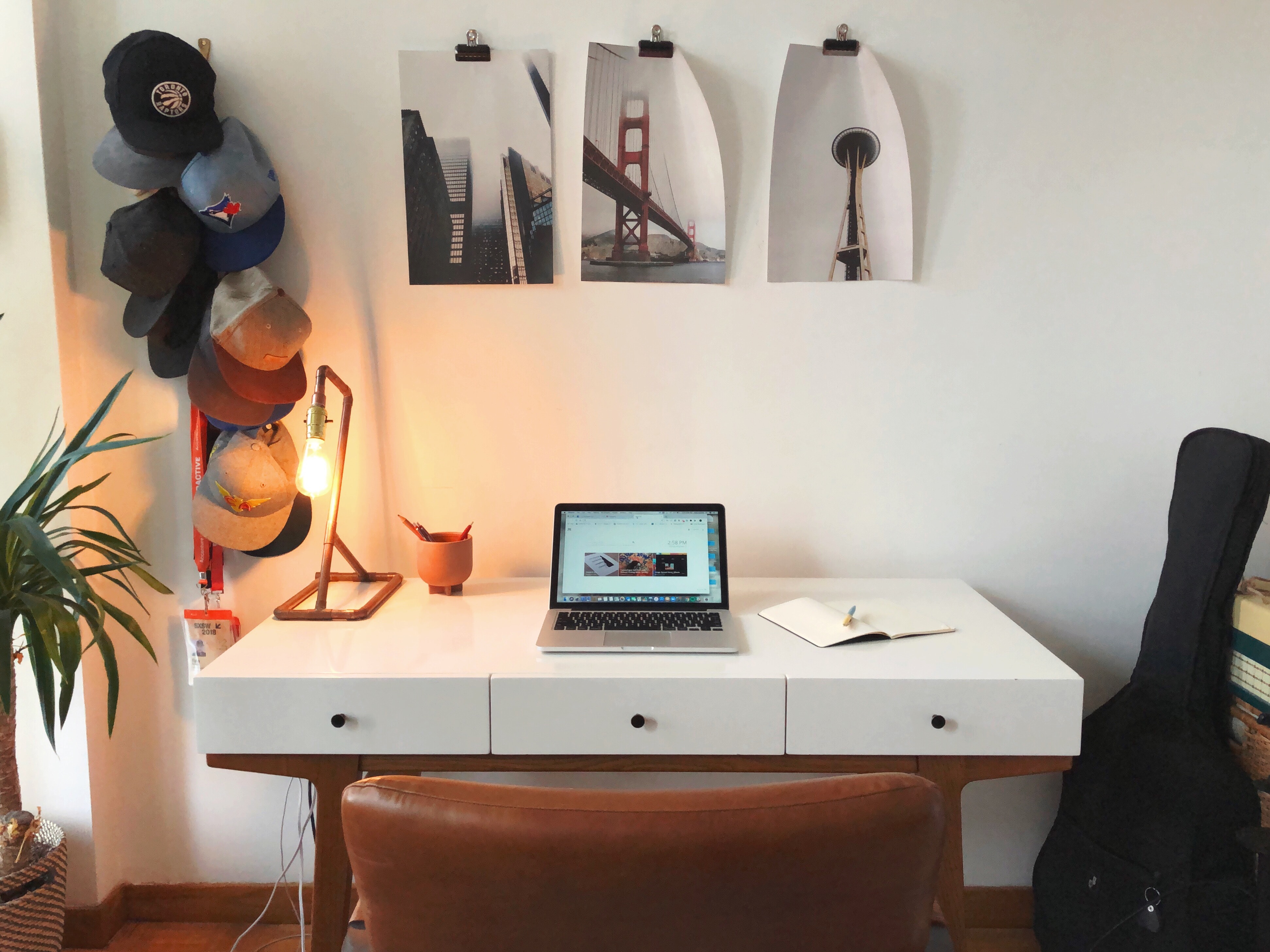
I have a lovely, vintage painting of an Italian countryside near my desk.

I find myself glancing at it frequently during the day. In the foreground there are olive trees and a group of children running up a hillside. In the distance, you can see the blurred outline of a small village amidst the mountains. The painting is an integral part of my workspace. Somehow it inspires me. I can’t say exactly how or why, but it takes me to a place beyond the walls of my home office. The painting functions somewhat like a contemplative garden — or temple — helping me to focus.

I have seen quite a few uninspiring work environments over the years. When I enter a client space that is dark and drab or cluttered and chaotic — I actually begin to feel their overwhelm. I always imagine those working there, feel somewhat the same way. Many of  them expressed they found it difficult to focus and become productive and that is not at all surprising.

There was no energy or joy present.

The practice of ignoring the physical aspects of where you work is not a wise one, as our workplace surroundings do affect us. Ultimately, work environments should be considered quite carefully. The space should function like a temple — focusing deep respect and care toward our work.

Your space reflects who you are and the importance of your work. Here are “temple” elements you should incorporate into your work space:

  • Peace. Work environments should be calming — not mired with endless drama or negativity. There should be at least one dedicated space that is quiet, so you have the ability to hear yourself think.
  • Simplicity. Office environments should be streamlined, with as little meaningless clutter as possible. It helps to be somewhat organized. You should be able to find important items when you need them.
  • Symmetry. Visual components which include symmetry can add a feeling of balance to your work space. You can group pictures or objects into pleasing patterns; you may find this soothing during hectic times.
  • Inspiration. Just as temples can bring moments of inspiration, your workspace should also be energizing. Fill your work environment with people, conversation and visual cues that help you feel positive and successful.
  • Respect. At the core, your space should convey the respect you hold for your work and what you have set out to accomplish. Your surroundings should celebrate not only your past, but where you are headed.

Is your workspace a temple? Tell us how and why.

Live.Work.Think.Play shares observations concerning a wide array of topics from running a company — to the perfect scent. It is designed to share lessons learned from a variety of perspectives.

Uncategorized

The Everyday Joy of Collecting

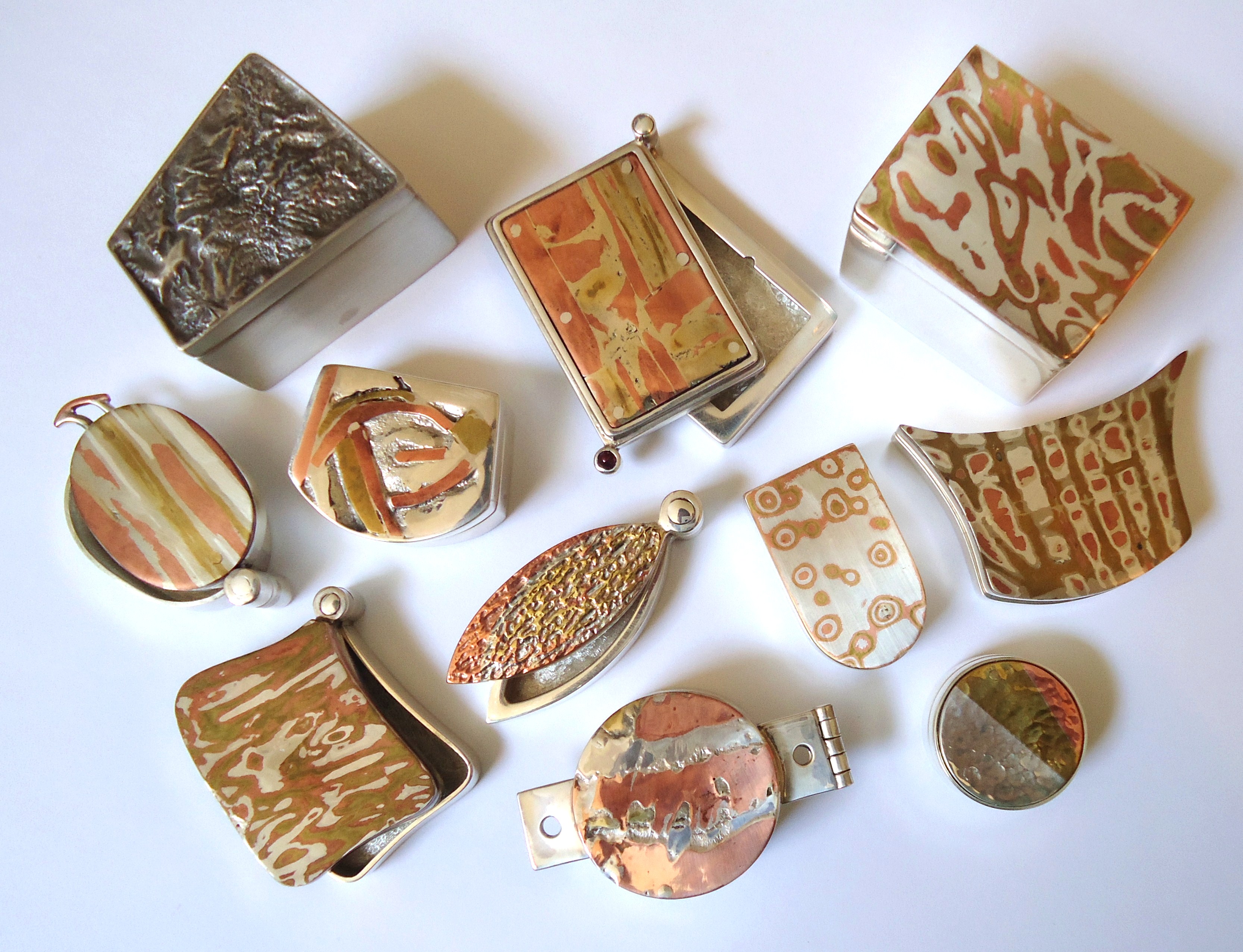
Silver_box_collection Photo: Wikimedia

Jerry Seinfeld has a spiel which includes the following observation: “We are all just filling in the gaps of life. We’re killing time. There is a lot of dead air.”

If you do have any modicum of spare time to spend, you’ll want to use it wisely. One great way to fill that time is to collect — and what you collect is not nearly as important as how the process of collecting makes you feel.

Over the years I’ve seen 101 types of collections, from 1rst edition books to Pokemon to antique silver spoons to sea shells. While I know little about all of the sub-types, I surmise that they all bring joy to their owners. (My father refurbished vintage Victrolas and the associated records. It was on one of these that I first heard Enrico Caruso sing Pagliacci.) I now realize, that the activity of collecting was a welcome counter-balance to his role as a physician.

Collecting can provide balance & order for many of us — it can link us with the past and offer a deep sense of satisfaction.

Why collecting is enjoyable isn’t a mystery. Here is what collecting can offer:

  • A sense of mastery. Learning something new is always high on the hit parade of things you should be doing. Becoming well versed in a new area, can engage your mind and boost your mood.
  • Community. When you collect —  you will inevitably meet other people who collect. What could be better than exchanging stories about a rare item or a great new source.
  • Fun. The enjoyment that goes with the hunt for that perfect piece, is probably one of the higher points of collecting. The great thing? You never know when or where that piece will turn up.
  • Sharing. Displaying a great collection is an added bonus to collecting. You’ll create opportunities to discuss the where, why and how of your efforts.
  • Memories. Objects can connect moments and keep them alive in our minds. It is as if what we are experiencing, becomes frozen within the item.
  • Income. In some cases, collections can evolve into profitable businesses. The passion behind the collection can drive you to help others do the same. With sites such as Ebay, there is likely a market for your items. (More options to sell your items here.)

I’ll have to add, that as Jerry Seinfeld expressed about “filling that dead air” — collecting does a pretty fine job.

Do you collect? What has collecting brought to your world? Share what you collect in comments.

Live.Work.Think.Play shares observations concerning a wide array of topics from running a company — to the perfect fragrance. It is designed to share lessons learned from a variety of perspectives.
Uncategorized

Need to Boost Your Creativity? We Have a Playlist for You!

kris-chin-343494-unsplash

We all need a creativity “jump start” from time to time.

At live.work.think.play. we’d rather you didn’t stare at that blank screen or piece of paper, unsupported. So — we’ve pulled together a playlist that may help you understand why you could be struggling.

There is a rundown of this week’s featured playlist below. Find it listed under “Playlists” at our newly minted YouTube Channel: https://www.youtube.com/channel/UCPobAd0urxAGPaVu4PNWsIQ.

Let us know what you think of our picks.

Creativity & Inspiration Playlist:

Huub Koch, 29 Ways to Stay Creative. This quirky visual story, tells us that where creativity is concerned — sitting at our desks is likely not the way forward.

Elizabeth Gilbert, Your Creative, Elusive Genius. In this fantastic TED Talk, Gilbert discusses the perceived dangers of making a living with creation. We find her talk to be both humorous and inspiring.

Elizabeth Gilbert, Success Failure, and the Drive to Create. J.K. Rowling is not the only prominent writer to face failure. Being a “creative” is a long and grueling road — and how we deal with both failure and success is vital.

Simon Sinek, Start with Why. Most often discussed in business circles, Sinek’s notion of “why” — gets to the core of how the greatest of creators actually create. Hint: It is all about perspective.

Ed Catmull, Overcoming the Forces That Stand in the way of True Inspiration. The force behind Pixar (yes!) discusses how we can stand in the way of our own creativity — and how he helped his own team move beyond that struggle.

Read more about this topic:

Have a possible addition to the playlist? Leave your suggestion in comments.

Live.Work.Think.Play shares observations concerning a wide array of topics from running a company — to the perfect fragrance. It is designed to share lessons learned from a variety of perspectives.

Uncategorized

The Everyday Guide to Putting Yourself First: Protect Joy

Joyful

Self-love, my liege, is not so vile a sin, as self-neglecting. – William Shakespeare, Henry V.

We rarely reinforce the idea that putting ourselves first is a healthy practice. We might reflect on what that might look like. Rehearse what we might say or do. We may have even explored practicing self-love or even becoming more selfish. Yet somehow, putting ourselves first escapes us.

Well — it could be that our starting point poses the problem. In this case, we need to stop thinking big and start thinking small. To put ourselves first, we must identify our own personal sources of joy. Secondly, we should protect that joy at every turn.

My father would frequently mention the brilliance of the “small things” in life. He would also contend that milestones (in contrast) were much fewer and far between. In retrospect, he was trying to teach a vital lesson concerning joy. The little things in our lives can also bring joy and satisfaction. (He frequently shared his passion for listening to Deutsche grammophon recordings. The Overture of 1812 will always be quite memorable.)

The small things are worth the time we devote to them.

These moments are approachable.

They are attainable.

They are sustaining.

None the less, we let life encroach on these discoveries. We forget them. We fail to indulge in them. It’s almost as if we grant permission to spoil the ending of every great book or movie. You have to protect the joy to come.

I challenge you to make space to put “you” — and put those small things first (in both life and career). Carve out room to include the elements that might bring everyday joy to your world. This is not about ignoring your tasks or responsibilities. It is simply about recognizing a responsibility to yourself.

So.

  • Protect the roots of joy in your life — wherever and whenever possible.
  • Recognize (and discern) the importance of the small things. Revel in the joy of a good laugh, your YouTube playlist, or a great New Yorker cartoon.
  • Play to your strengths. We have plenty of opportunities to focus on weaknesses.
  • Value your time. Say “no” if you mean to say “no”.
  • Have lunch with someone that always sees the very best in you.
  • Leave behind those that choose to misunderstand you.
  • Align your work with where you wish to be.

Be fierce. It’s alright to put you first.

Now, go ahead.

______________________________________________________

What are the small things that bring you joy?

_______________________________________________________

Read more on the topic:

The Happiness Project by Gretchen Rubin: http://gretchenrubin.com/

The Miraculous in the Mundane, Brain Pickings.

Happiness Habits That Will Make You Thrive at Work, by Jennifer Moss.

Work On Yourself First, by Donna Stonehem,

Live.Work.Think.Play shares observations concerning a wide array of topics from running a company — to the perfect fragrance. It is designed to share lessons learned from a variety of perspectives.

Uncategorized

The Inventors: Thanks for the WiFi — Hedy Lamarr!

Hedy-Lamarr-bigBefore home offices and side gigs became staples in our world of work — long before women in STEM became a movement — there have always been remarkable individuals who pondered life’s greatest challenges, nurtured ideas and became inventors. Many of their inventions remain relatively unknown, even as we benefit from their brilliance each and every day.

In fact, many of the inventors are better known for their “day jobs”.

One such individual, is the enduring silver screen actress Hedy Lamarr. Discovered in Paris by MGM mogul Louis B. Mayer, she made her American film debut in 1938. (Her luminous co-stars included Clark Gable, James Stewart, Spencer Tracey and Judy Garland.) However, a collaboration with composer George Antheil, proved equally as enduring as her incredible stage presence.

Their invention — a radio guidance system for torpedoes, focused on rapid frequency hopping — and was designed to thwart jamming by Axis powers during World War II.  With a knowledge base of munitions gained from an early marriage, she and Antheil successfully utilized patterns of radio signals (only known to the transmitter and receiver) to improve guidance systems. Remarkably, the principles of their work are now incorporated in current day WiFi and Bluetooth technology.

The pair received a patent in 1942. However, its elements were not widely applied until the 1960s. A play Frequency Hopping told their engaging story, which explains how the fluidity of music and ka nowledge of munitions combined to change the world.

Its always seems that the intersection of two worlds can lead to astounding creations.

Their invention was a game-changer.

Your collaboration could be the the next big thing.

Thanks Hedy.

Your side hustle is one for the history books.

Read more:

Live.Work.Think.Play shares observations concerning a wide array of topics from running a company — to the perfect fragrance. It is designed to share lessons learned from a variety of perspectives.

Uncategorized

Hitting the Gym to Build Strength? Don’t Forget About Resilience

victor-freitas-667481-unsplash

I’ve often wondered why building resilience isn’t a key “life imperative. Primarily because being human is often at odds with our daily struggles. Work can routinely bring stress, negativity and outright failures. Family responsibilities and stress can add to the equation. Most of us feel unprepared to combat the cumulative effects.

We often frame conversations about resilience with stories of extreme hardship or extenuating circumstances. However, built resilience could serve as an ever-present, daily mentor, helping us to rebound from the everyday pressures of our lives. Most of us forge on, taking little note of the increasing toll. Building resilience isn’t considered. This can be a serious mistake.

We don’t need to climb Everest, to reap the benefits of resilience.

Through all of our trials and tribulation, we rarely notice that our psychological resources are waning.We muddle on. We develop idiosyncratic mechanisms to bolster our mood. However, the damage accumulates and we become less able to bounce back. Months later, we may realize that we still lament the project that has been cut or the argument that may have cost us a friendship. Our energy levels are affected.

When the next event unfolds — we find ourselves bankrupt. Devoid of the necessary resources to meet the challenge.

There have been a number of discussions on this topic, including protecting ourselves from overload, banking positive currency and practicing self-compassion. However, what if we could take resilience one step further? Could we effectively build our skills (and our team’s skills) in this area — just as we challenge our muscles in the gym?

Can we learn to think and act more “resiliently”?

Well — yes. There is evidence that resilience can be learned. The work of Dr. Fred Luthans (who explores the construct of Psychological Capital) has completed research examining this area. Supporting research completed completed by Ann Masten also provides important foundational elements. This includes addressing 1) asset factors (elements that enhance our resilience, such as a stable home life or a healthy way to examine failure), 2) lowering risk factors (for example, a lack of a mentor) and 3) altering our perceptions concerning the potential to influence work life circumstances.

Here are a just few ways to apply this knowledge to our daily lives:

  • Facilitate network building. Building long-term asset factors, provides a stable foundation to help us deal with stressful work situations when they do arise. Consider losing a job for example; stronger networks can help employees move on more effectively by providing access to critical information concerning roles and growth needs.
  • Clarify strategy and goals. Reducing risk factors — elements which weaken our psychological safety net, is also vital. For example, knowing “why” we are completing a task and how our role contributes to outcomes is critical. If we fail to believe that our actions have meaning, we are less likely to forge on.
  • Utilize the “staunch reality” viewpoint. One scenario that quickly depletes psychological resources, is sticking to a game plan that is simply not working. Understanding that we have the ability to influence outcomes by embracing realistic assessments of workplace situations — can help us to prepare. This honest view is necessary to review history, properly identify setbacks, evaluate potential impact and brainstorm possible responses before they occur.
  • Aggressively focus on strengths as a “vaccine”. We can mitigate the negative after effects of stressful events, with a focus on positive elements. This includes the identification and utilization of an individual’s stronger vs. weaker skill sets. A focus on the latter, can quickly deplete our psychological reserves.
  • Explore the sources of “drain”. The elements that drain our psychological reserves can be varied (and often surprising). Consider the sources that affect you and meet with your team (or family members) to determine where the leaks are occurring. Brainstorm actions to stem the tide.

How do you build resilience for yourself? Share your strategies here.

Live.Work.Think.Play shares observations concerning a wide array of topics from running a company — to the perfect fragrance. It is designed to share lessons learned from a variety of perspectives.

Uncategorized

The Everyday Guide: Why Handbags Don’t Work For Us

woman wearing black coat
Photo by Phil on Pexels.com

Note: Updated for 2024

In my mind — form must always follow function.

This axiom applies even when we are discussing fashion accessories.

I’ve spent most of my working life searching for the handbag  which does not reduce me to a puddle, when searching for something. (Daily life can become so much more challenging when your essential items are in disarray at the bottom of a pit. Travel only emphasizes the problem.) I can only imagine what the person behind me in line must be plotting, as I sift through the ocean that is the interior of my handbag.

Know this — I am cursing my handbag misfortune.

Personal complaints aside, designer handbag sales have dropped precipitously over the years. It is deserved. One reason may be all too obvious — the bags being made just don’t meet the needs of the of those who actually choose to carry them. Pretty handbags simply need to have more substance than being emblazoned with a chic designer’s name.

I’m long over it. They need to do their share of the work. They need to earn their keep. They need to earn our trust.

I have loved and lost quite a few great bags to prolonged wear and tear, which always leaves me with another search for my next “holy grail” bag. This one — which I owned in black, will live in my heart forever — as you could view everything that lived inside at one time. (No digging required.) The straps had ample drop to allow me to sling the bag over my shoulder. (So many of you clicked on the photo, that I’ve identified an updated version here.)

A lost love.

Sigh.

Feeling organized, professional and in control definitely extends to my accessories. Handbags need to really work for their owners. I had a friend who described her handbag search as a grueling “interview process”. I get that. I really do. It’s real.

I posed the “perfect handbag” question to YouTube lifestyle vlogger, Marnie Goldberg. (Find her down-to-earth advice here.)  She shared this, “I think the key is a few pockets — a somewhat structured shape but not too many pockets or you’ll forget where you put everything. It’s hard to say there’s one perfect bag. Everyone has individual preferences.”

Structure, yes! You hit the nail right on the head! I also agree, that each of us has a handbag “soul mate” out there. But like any soul mate, they are not hanging out on the corner for you to discover them. Searching is necessary.

Below you’ll find a few handbags worth considering. They all have what it takes:

  • Proper handle drop  for shoulder or back slinging.
  • A light or bright lining to avoid “cavernous pit” digging.
  • Compartments/pockets for small items. (A divided interior works best, if you can find it.)
  • Enough structure (so the purse isn’t too slouchy) for easy “browsing”.

BTW, you should consider a Purse Organizer, if you already have a handbag you love. Find a highly recommended organizer here.

Here are a few suggestions.

What I currently carry:
No regrets with Tory Burch’s , McGraw Triple Compartment Tote in black pebbled leather, shown below, now discontinued (so sorry).

Big plus: All about the compartments that truly function like file drawers.
Another big plus: The leather is thick & tough, so no babying this one.
Minor complaint: The lining is black, so small essential items could hide if not a bright color or in a pocket. (I’ve actually come to hate this over time.)
Another complaint: A bit pricey, although it will last years. I never hesitate buying a good bag second-hand. So, take a look around.


Backpack lovers:
If you love sleek city style, consider this convertable style from Kate Spade .

Love a cross body?
This cross body bag from Everlane has a bit of moxie (and yes, compartments galore): The Mini Studio Bag.
Find it here:

Everlane’s Italian Mini Studio Bag

Here’s hoping you find the handbag of your dreams.

Do you own a handbag that really works for you? Please share what you love in comments.

The Tilbury Edit shares observations concerning a wide array of topics from running a company — to the perfect gift. It is designed to share lessons learned from a variety of perspectives.

Uncategorized

Why Do We Complicate Things?

sara-farnell-3-Uwcgcba0U-unsplash

Life is really simple, but we insist on making it complicated – Confucius

I’ve just spent the last 3 days researching the annoying horizontal lines that have appeared on my computer monitor. I completed searches, visited a number of tech sites and read many, many suggestion on forums. I installed the updates that were recommended — and I cursed —  a lot.

Finally, as a last ditch effort, I decided to tighten all of the connections to the computer screen. (Interestingly, this was the very first suggestion I came across, however I immediately dismissed it.)

So — to my complete surprise, no more lines.

Wow.

Really?

Why do we make our lives more difficult by complicating things? Life could be much simpler if we would restrain ourselves from over-analyzing nearly every step of our path.

Think about this for a moment. We might take great advice without debate. We could  say “I’m sorry” to a client or customer or a family member, when things run amuck. We could listen more and talk less. We could say “thank you” more often to our co-workers or spouse. We could make decisions without a committee or meeting (Read about satisficers vs. maximizers here). We could pick up the phone instead of writing yet another email.

We might then have more time for the simple beauty that is everywhere.

005

I’d say there are at least one hundred ways we might uncomplicate our lives — and improve it as well.

Let’s go for it.

What will you do first?

Read more about it, by clicking on the photo.

Live.Work.Think.Play shares observations concerning a wide array of topics from running a company — to the perfect fragrance. It is designed to share lessons learned from a variety of perspectives.