Uncategorized

The Everyday Guide: Why Handbags Don’t Work For Us

woman wearing black coat
Photo by Phil on Pexels.com

Note: Updated for 2024

In my mind — form must always follow function.

This axiom applies even when we are discussing fashion accessories.

I’ve spent most of my working life searching for the handbag  which does not reduce me to a puddle, when searching for something. (Daily life can become so much more challenging when your essential items are in disarray at the bottom of a pit. Travel only emphasizes the problem.) I can only imagine what the person behind me in line must be plotting, as I sift through the ocean that is the interior of my handbag.

Know this — I am cursing my handbag misfortune.

Personal complaints aside, designer handbag sales have dropped precipitously over the years. It is deserved. One reason may be all too obvious — the bags being made just don’t meet the needs of the of those who actually choose to carry them. Pretty handbags simply need to have more substance than being emblazoned with a chic designer’s name.

I’m long over it. They need to do their share of the work. They need to earn their keep. They need to earn our trust.

I have loved and lost quite a few great bags to prolonged wear and tear, which always leaves me with another search for my next “holy grail” bag. This one — which I owned in black, will live in my heart forever — as you could view everything that lived inside at one time. (No digging required.) The straps had ample drop to allow me to sling the bag over my shoulder. (So many of you clicked on the photo, that I’ve identified an updated version here.)

A lost love.

Sigh.

Feeling organized, professional and in control definitely extends to my accessories. Handbags need to really work for their owners. I had a friend who described her handbag search as a grueling “interview process”. I get that. I really do. It’s real.

I posed the “perfect handbag” question to YouTube lifestyle vlogger, Marnie Goldberg. (Find her down-to-earth advice here.)  She shared this, “I think the key is a few pockets — a somewhat structured shape but not too many pockets or you’ll forget where you put everything. It’s hard to say there’s one perfect bag. Everyone has individual preferences.”

Structure, yes! You hit the nail right on the head! I also agree, that each of us has a handbag “soul mate” out there. But like any soul mate, they are not hanging out on the corner for you to discover them. Searching is necessary.

Below you’ll find a few handbags worth considering. They all have what it takes:

  • Proper handle drop  for shoulder or back slinging.
  • A light or bright lining to avoid “cavernous pit” digging.
  • Compartments/pockets for small items. (A divided interior works best, if you can find it.)
  • Enough structure (so the purse isn’t too slouchy) for easy “browsing”.

BTW, you should consider a Purse Organizer, if you already have a handbag you love. Find a highly recommended organizer here.

Here are a few suggestions.

What I currently carry:
No regrets with Tory Burch’s , McGraw Triple Compartment Tote in black pebbled leather, shown below, now discontinued (so sorry).

Big plus: All about the compartments that truly function like file drawers.
Another big plus: The leather is thick & tough, so no babying this one.
Minor complaint: The lining is black, so small essential items could hide if not a bright color or in a pocket. (I’ve actually come to hate this over time.)
Another complaint: A bit pricey, although it will last years. I never hesitate buying a good bag second-hand. So, take a look around.


Backpack lovers:
If you love sleek city style, consider this convertable style from Kate Spade .

Love a cross body?
This cross body bag from Everlane has a bit of moxie (and yes, compartments galore): The Mini Studio Bag.
Find it here:

Everlane’s Italian Mini Studio Bag

Here’s hoping you find the handbag of your dreams.

Do you own a handbag that really works for you? Please share what you love in comments.

The Tilbury Edit shares observations concerning a wide array of topics from running a company — to the perfect gift. It is designed to share lessons learned from a variety of perspectives.


Uncategorized

Why Do We Complicate Things?

sara-farnell-3-Uwcgcba0U-unsplash

Life is really simple, but we insist on making it complicated – Confucius

I’ve just spent the last 3 days researching the annoying horizontal lines that have appeared on my computer monitor. I completed searches, visited a number of tech sites and read many, many suggestion on forums. I installed the updates that were recommended — and I cursed —  a lot.

Finally, as a last ditch effort, I decided to tighten all of the connections to the computer screen. (Interestingly, this was the very first suggestion I came across, however I immediately dismissed it.)

So — to my complete surprise, no more lines.

Wow.

Really?

Why do we make our lives more difficult by complicating things? Life could be much simpler if we would restrain ourselves from over-analyzing nearly every step of our path.

Think about this for a moment. We might take great advice without debate. We could  say “I’m sorry” to a client or customer or a family member, when things run amuck. We could listen more and talk less. We could say “thank you” more often to our co-workers or spouse. We could make decisions without a committee or meeting (Read about satisficers vs. maximizers here). We could pick up the phone instead of writing yet another email.

We might then have more time for the simple beauty that is everywhere.

005

I’d say there are at least one hundred ways we might uncomplicate our lives — and improve it as well.

Let’s go for it.

What will you do first?

Read more about it, by clicking on the photo.

Live.Work.Think.Play shares observations concerning a wide array of topics from running a company — to the perfect fragrance. It is designed to share lessons learned from a variety of perspectives.

Uncategorized

You Should Carry a Notebook

evie-s-yDN0aAiHSMg-unsplash

Photo: evies@unsplash

Throughout much of my career I’ve opted to carry a notebook. I suppose it is my own form of “idea GPS”.  I believe that moments of clarity are precious & deserve to be recorded. I hate when something crosses my mind and then disappears.

Notebooks have so much to offer — including a dose of balance to our ever-growing online lives. They are easy companions. A notebook can accompany you on business trips, vacations and moments of solitude. I’ll concede, that other methods might prove to be superior in certain situations. However, there is nothing like putting pen to paper. (The physical process of writing helps us commit information to long-term memory and can aid in idea development.)

Da Vinci utilized notebooks and that alone is good reason to employ one. He often used mirror-writing — but don’t let that deter you. (Mirror writing is definitely optional.)

In the past, I’ve carried standard spiral notebooks (I enjoy college logos). However, today there are so many interesting choices that I splurge on notebooks that simply catch my eye. They are a little like a “statement” piece. I consider the purchase an everyday luxury, much like a really great cup of coffee.

My notebook habit may seem old-fashioned. However, it’s a habit I don’t intend to break. I have some quirky habits that are captured. For example, glancing at my notebook “system”, there are project notes and “to do” lists at the front and client interview notes toward the back (dated with contact phone numbers). I’m sure your system is equally as quirky. However, notebooks are so very forgiving.

Want to try a notebook? Below you’ll find a few interesting options. Click on the item photo or link to learn more, read the reviews or purchase.

I hope you find a notebook that can help your great ideas come to life.

Rhodia: This one is great for meetings.

____________________________________________________________

Hand Crafted & Playful:

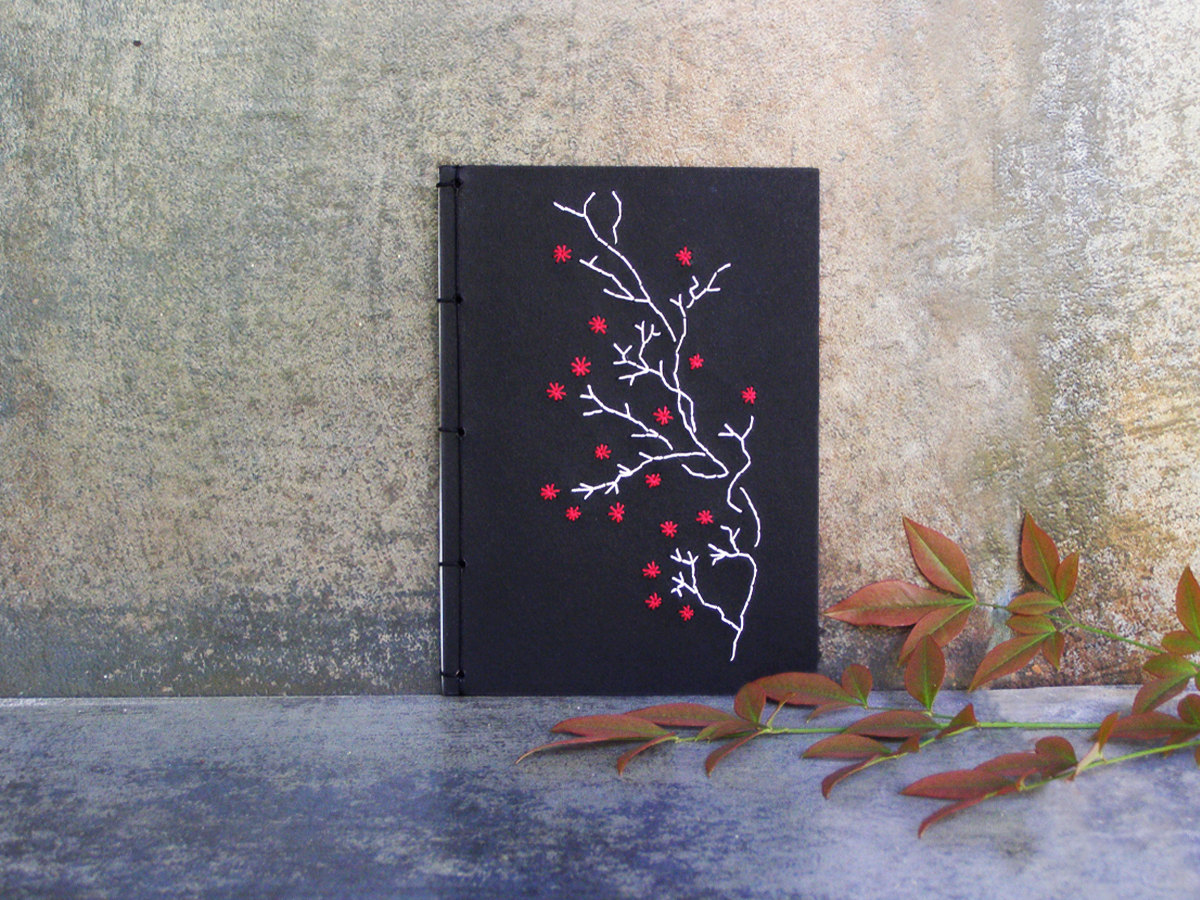
Blooming Branch Notebook by Fabulous Cat Papers.

BloomingBranchNotebook

Live.Work.Think.Play shares observations concerning a wide array of topics from running a company — to the perfect fragrance. It is designed to share lessons learned from a variety of perspectives.

Uncategorized

The Everyday Guide to Time Management: You Need to Deal with You

Photo by Kindel Media on Pexels.com

Let’s talk turkey about time management.

It’s a sticky problem to tackle. Primarily because it requires being brutally honest with ourselves to get a grip on the issue.

Yes, we all go through periods when work (and life) feel “out of control”. However, there are strategies that might have prevented the lion’s share of that stress. We have to be aware of the sources. And that’s on us.

Where time management is concerned — it seems that we can turn out to be our own worst enemies.

Here are a few points to consider.

1. It’s Your Problem
The bottom line? No one else is going to value your time if you do not. You have to teach others (and yourself) through words and actions, that your time is valuable. That may sound as if I’m characterizing all your of coworkers and clients (or room mates or family members) as disrespectful. It’s not that. They simply have their own lives to worry about and you need to worry about yours. If you feel someone is taking advantage — be honest and let them know you’ve spent as much time as you possibly can to help them. Point them in the right direction for more guidance. Be polite but firm. You’ll find that after you go through this once or twice, the process will become easier.

2. You Have to Cut the Cord
Here’s the thing — a time-management problem is usually not a time issue – it is a task issue. Specifically, you are not sorting through your work life (family life, student life) and deciding which tasks really matter. This is like keeping old shoes in your closet that you really don’t wear, but continue to take up valuable space. Sometimes you have to give useless tasks the old “heave-ho.” Do you compile a report that nobody utilizes? Attend a weekly meeting that isn’t beneficial or necessary? Write the eulogy and cut the cord. It’s up to you. Choose or lose.

3. Playing Favorites is a Must
You hate prioritizing. Of course you do! Everyone does. But, the number one priority to learn to have respect for your own calendar. Just remember that multitasking doesn’t work. Focusing on a single task, without interruption is critical. If you need a release valve in your schedule for tasks that pop up, set up time each Friday (or any plan that works) to connect the dots and tie up loose ends that develop during the week. Tell people politely, “My schedule is tight at the moment, but I’ll have time to explore that on Friday.” During this designated “catch-up time” you can consider requests and communicate responses.

4. Admit It — You’re a Control Freak
I know this excuse: “I don’t like to delegate.” But if you are a manager (or a supervisor or a Mom), the fact is that if you don’t learn how to delegate confidently, you will have trouble moving forward. Why? Because you won’t have the time to become a real leader. Chances are, you don’t trust other people to do the job as you would do it. I know. I’ve heard that excuse as well. But a surefire way to build resentment is to show your staff that you don’t trust them. You have to give up a little control and “mine” some time for the bigger picture.

5. Excuses Won’t Work
If you have a scheduling snafu, remember to ‘fess up as soon as you realize there is a problem. Recently I waited for a scheduled appointment with a specialist. After an hour, a nurse came out to ask if anyone was waiting for Dr “X.” After identifying myself, she let me know it would be at least another hour to see the doctor and asked if I would like to reschedule. They explained that the reason for the delay was that there were late additions to the schedule, but apparently they were on the books before I walked in the door. They didn’t bother to call or text me to offer an option not to wait. If you are running behind or forget a commitment, take ownership as soon as you realize there is a problem. You’ll have a better chance of salvaging the relationship.

Time is a valuable commodity.

Use it wisely.

Read more about it:

Marla Gottschalk is an Industrial/Organizational Psychologist. She is a charter member of the LinkedIn Influencer Program. Live.Work.Think.Play shares observations concerning a wide array of topics from . It is designed to share lessons learned from a variety of perspectives.
This post was originally published at Talent Zoo.

Uncategorized

Claiming Your Big Break

ReachingfortheBrassRing
Harold Feinstein, Reaching for the Brass Ring, Coney Island, 1958

I was smart enough to go through any door that opened. – Joan Rivers

We all have misconceptions about what our next great opportunity might look like. We imagine that single phone call — or email — that will somehow change our lives. However, I’m not convinced that these “big breaks” are always movie worthy. I would argue, they may arrive without a validating signal announcing their significance.

Successful people are often asked how they became successful. Many talk about repeated failures and perseverance. (I think we’ve come to expect this). However, if you listen  closely there was a moment — an opportunity that was presented — that was not glamour filled, yet helped lay the groundwork. Rachel Ray drove 9 hours (through a snowstorm with her Mom) to reach the Today Show set with Al Roker. However, this was long after she had developed her idea for 30 minute meals. She first taught her concept at chain of local grocery stores.

That effort comprised her “big break”.

Big breaks may not arrive perfectly packaged with accompanying bows. They are often a single step that may not stand out as “the one”.  (Trust me, I have nothing against dreaming — but opportunities are often not what we imagine them to be.) In reality, they are neither clear or concrete.

Like jazz music that may not have clear “edges”. But, with further exploration they may possess “flow”.  By nature — opportunities require us to explore, invest our time and take measured risks. Career-wise they often offer experiences that round out our skills. (Pursuing side paths, for example allows us to explore opportunities without entirely leaving our current lane. You might even pursue multiple paths.)

Opportunities hold potential — not promise. They lie in experiences, built connections and perfected ideas.

The problem is that we often fail to see them for what they are.

Opportunities come in many packages.

Be sure you open all of them.

Have you ever said no, only to realize it was a missed opportunity?

Read more (click on the photo):

Marla Gottschalk is an Industrial/Organizational Psychologist. She is a charter member of the LinkedIn Influencer Program. Her thoughts on work life have appeared in various outlets including Talent Zoo, Forbes, Quartz and The Huffington Post.

Uncategorized

Brands to Love (and Respect): Mirabelle

Mirabelle

Here is another brand worth the conversation.

Jewelry can take any wardrobe from ordinary to amazing — and an inspired jewelry designer can bring more to your wardrobe than just outward beauty. One such maker is Mirabelle, a British based Fair Trade* company with pieces are created with “love and soul”. (We can all use a bit of that on a daily basis).

Founded by Veronique Henry, the daughter of a Parisian silver maker, Mirabelle Jewellery Ltd exudes a quality of understated elegance. Worn by many, including the Duchess of Cambridge (she chose the Lolita Earrings,) the brand has been seen on numerous editorial pages.

As described at Mirabelle’s site, pieces are created:

“With a strong belief in the power of jewellery to uplift the spirits, collections are imbued with symbolism and meaning, from crystal stones to ancient talismans.”

The brand includes a number of curated collections, including a British made charm collection, a fair trade collection and a natural pearl collection. All include wonderful, easy to wear pieces.

Here are the links to our favorite picks. (BTW, these items are affordable.)

Our Earring Picks: (Quite difficult to narrow the choices! See the entire collection here.)

Lolita
Source: Mirabelle Website

Charm Collection Picks:

Let us know if any of the pieces spoke to you.

*From Mirabelle’s website: Fair Trade is a tool for reducing poverty in developing nations. It’s a form of Trade that builds equitable and long-term partnerships between producers in developing regions of the world and consumers in the north.

Fair Trade Guarantees many things including the following :
“…producers “receive a minimum set price for their goods, financial and technical support, healthy and safe working conditions, economic development of their communities, and educational opportunities for their children.”

Live.Work.Think.Play shares observations concerning a wide array of topics from running a company — to the perfect fragrance. It is designed to share lessons learned from a variety of perspectives.

Uncategorized

We All Change. Your Work Life Should Too.

jason-leung-wQBCIJJgeJI-unsplash

As human beings we are destined to evolve — and as we morph into the people we are about to become — other areas of our lives often require adjustment. Yet, most of are hell-bent in thinking that our days of change are long behind us. (We couldn’t be more wrong.)

As luck would have it, our lack of ability to predict when and how we might change, has become the subject of study. Longitudinal research completed by Harvard psychologist Daniel Gilbert has aptly named our lack of foresight concerning how we change,  “The End of History Illusion”. It is the belief that the end of our history is today — when in fact we will continue to change with the passage of time.  (You can watch Dr. Gilbert’s TED Talk, “The Psychology of Your Future Self” below. I guarantee it will rock your world.)

In a series of studies, Gilbert explored the process of how we view personal change over time and its impact upon our lives. Their research revealed that we tend to underestimate changes in both our core personality traits (represented by the “Big 5”: conscientiousness, agreeableness, emotional stability, openness to experience and extroversion) and our core values (measured by the Schwartz Value Inventory) over the decades of our lives. While, the magnitude of the illusion seems to decrease as we age,  it remains present. We continue perceive ourselves as “complete” — which couldn’t be further from the truth.

Meanwhile here is a bit of sage advice related to this finding:

Try not to view your career path as inflexible.
Just as we see our own persona as unchanging, we can feel stuck or stalled because we see only one career path — and that path likely travels in one direction. If we can step back, (down or even sideways) to learn something new, interesting doors present themselves. Yes, it is challenging to be a “rookie” once again. However that same challenge can be the key to a more fulfilling future. Whitney Johnson, author of Disrupt Yourself: Putting the Power of Disruptive Innovation to Work offers this advice:

“Be willing to step back. Backward could be your slingshot.” – Whitney Johnson

Let your personal brand evolve.
Acknowledging how we have changed over time — and aligning this with our communicated personal brand is also something to consider. Has what you truly desire to accomplish career-wise changed? Do others understand that shift? Cynthia Johnson, co-founder of Ipseity Inc, a firm that helps others develop their brand voice, encourages individuals to differentiate their personal brand in a way that is authentic. (See more of her tips here.) Utilizing digital avenues to craft and communicate your evolving personal brand, may also help align career goals with the new you. She advises you take this in steps:

“It is important to include short-term and clearly defined goals while mapping out your brand strategy. If you try to do everything at once you will become overwhelmed and do nothing at all.” – Cynthia Johnson

Bring on the new.
Aspects of work and life, that may have thrilled you in the past — may no longer motivate you. What could you bring into your world that would “meet you” where you are now? I love the advice of Gretchen Rubin (author of The Happiness Project) concerning work and those painful feelings of “envy”.  She advises that feeling envy when considering another individual’s role, may signal elements that you might incorporate.


Marla Gottschalk is an avid blogger and Industrial/Organizational Psychologist. You can follow her at LinkedIn, Twitter and Instagram. Live.Work.Think.Play shares observations concerning a wide array of topics — it is designed to share lessons learned, from a variety of perspectives.

Uncategorized

We Are Obsessed With “Fearless Girl” (You Should Be As Well)

LinkedInFearless
Photo: Lydia Montgomery

In the Unites States, less than 15% hold corporate board seats within global companies. (In some sectors, the percentages are even slimmer). The numbers are sobering. Organizations that include women at the highest of management levels, can enjoy a number of potential advantages, including financial performance and problem solving capabilities. Why the discrepancy?

How do we begin to shift the mindset?

Hence — “Fearless Girl”. (Read more about it here.) A direct response to the lop-sided makeup of the highest ranks of many organizations.

That the statue stands in defiance of the icon “Charging Bull” —  in the midst of New York’s financial district holds tremendous significance. (She’ll be there for one year, although many are fighting to keep her. Some are unhappy with her presence). The statue was surprisingly commissioned by State Street Global Advisers. Its message is to inspire the many companies in which they invest (more than 3500) to advocate for more women at their highest ranks.

FearlessgirlBostonGlobe
Photo: The Boston Globe/ Mark Lennihan

This week, the bronze statue received a number of awards at the prestigious Cannes Lion Creative Festival. (Artist Kritsan Visbal’s beautiful piece was cast at Baltimore’s Hampden Studio New Arts Foundry.) The campaign creators  — Lizzie Wilson and Tali Gumbiner — have expressed that they are more than thrilled.

We  are as well.

Congrats to Fearless Girl!

Courage is everything.

Live.Work.Think.Play shares observations concerning a wide array of topics — it is designed to share lessons learned from a variety of perspectives.


Uncategorized

You Should Take a Walk

4123755-young-woman-taking-a-walk-in-the-park

“It is my belief, you see, that thinking is a double phenomenon like breathing.” – Isaac Asimov

In life and work — our attention has become infinitely divided.

Because of this, we must become acutely aware of the need to leave room for our minds to ponder and expand. To let go. To make connections and settle internal arguments. To create.

However, the ultimate justification rests deep within our brains.

While we possess the ability to switch between tasks — we simply do not have the ability to attend to all of them effectively. (Research at Stanford has shown that heavy multitaskers have trouble mastering even the simplest of tasks.) Often “down time” is the difference between solving or struggling with a problem. As further discussed in this article, you truly require unstructured time to let your brain flourish.

So, I’d like to pose the question: Are you carving out devoted time to let your brain rest?

A daily walk may be just the mechanism you need.

Some of the most incredible individuals of the last 400 years, spent a portion of their time walking. (See Mason Currey’s, Daily Rituals below). While their areas of expertise were varied (and remarkable), there was one link among many of them: From Milton to Tchaikovsky, many set aside time for a daily walk. A few ventured alone. One with family.

Shame on us — we know better.

Walks rock.

Here are just a few of the benefits:

  • Digestion. I’m not referring to gastronomy — I’m referring to all of the information you’ve taken on-board today. It’s difficult to see patterns and develop linkages when your brain isn’t allowed the time to process effectively.
  • Fresh air. I love my office, but a change of scenery does help me to feel rested and refreshed. Unfortunately, I don’t have access to a beach or a handy mountain range to view, as some of my colleagues. But the breeze is just as refreshing here in the mid-west — the birds just as vocal.
  • Lowered anxiety. With our busy work lives comes our unshakable friend, anxiety. Physical exercise has great way of managing this nagging work life by-product.
  • Device reprieve. Not sure how much time you must spend in front of a computer or with a cell phone perched to your ear — but I do a lot of my work on-line. At times, I simply forget there is more to life than Power Point.

Commit 20 minutes each day this summer to get out and walk. Whether it’s a stroll around your office building, a nearby park or a quick trek to grab lunch and back, I challenge you to do so.

Take a tip from Amadeus Mozart and keep paper and pencil handy.

Write us here and let us know what happens.

Mason Currey’s Daily Rituals:How Artists Work  gives us a glimpse into the lives of many creative giants.*
(Click on photo to learn more.)

Want to read more about this topic?
Problem Solving and Rest: Another Look at the Eureka Phenomenon
https://marlagottschalk.wordpress.com/2012/04/19/the-psychology-of-effectiveness-another-look-at-asimovs-the-eureka-phenomenon/

Marla Gottschalk is an avid blogger and Industrial/Organizational psychologist. Live.Work.Think.Play shares observations concerning a wide array of topics — it is designed to share lessons learned, from a variety of perspectives.

Uncategorized

The Everyday Guide to Workplace Confidence: Work Hard & Yes, Feel a Little Entitled

20151020124625-pride-confidence-hubris-woman

Confidence is one very tough customer.

If you’ve ever stood tentatively in front of an audience — or felt like an impostor in the face of a new Challenger — I would place a wager that those nagging feelings were rooted in your level of confidence. When considering workplace confidence, there are many platitudes but few really ring true. How do you truly believe in yourself when faced with the moments that matter most? Those situations simply cannot be tackled by adages or quotes to “Fake it until you make it.”

So…how do we build confidence?

Well, I’ve stumbled upon one perspective that hit a nerve of truth (reading it stopped me cold).

I don’t often read magazines. Yet, when visiting the hair salon I often thumb through the pages of Glamour, Vogue, Allure — and they all offer their own brand of career advice. One particular career column in Glamour was guest authored by Mindy Kaling. (She is not your traditional career writer. However, she has managed to accomplish career-wise what few have in her industry.)

Her thoughtful response to a question posed by a nervous young girl at a speaking engagement says it all.

“How did you build your confidence?”, the attendee posed.

She was resolute that she fumbled the answer in the moment— offering her stable, strong upbringing as the reason. But, her revised response was both direct and unapologetic. It went something like this (an apology for the word choice, they were hers and would prove diminished by an edit):

Work very hard. Know your $hit. Show your $hit. Then feel entitled.

I absolutely agree — that confidence is rooted in mastery. Not in fluff or empty quotes.

Confidence us rooted in experiences. In owning what you bring to the table. Confidence comes from feelings of self-efficacy in a wide range of situations. It requires challenge, guidance, sponsorship, balanced exploration and failure.

True confidence acknowledges that we are not entitled to rewards simply because we desire them. Rewards come with time and work. Confidence comes from putting forth smart, selective effort.

  • It requires patience — and the belief that you can learn something from every person and situation.
  • It requires both feedback and reflection.
  • It requires an unfiltered look at our strengths and weaknesses.
  • It requires the deep sense that you can handle the problems (and people) that stand before you.

When you embrace these elements  — confidence becomes your entitlement.
So:

  • Seek broad experiences and “challenge assignments”.
  • Develop a deep knowledge of your industry and its current experts.
  • Push yourself. Get up when you fall. Alter your course.
  • Find an individual who helps recognizes and invests in your talent.
  • Be aware of the competencies required to stay ahead of the “disruption curve“.
  • Continue to learn.
  • Grow.

And then — yes — feel entitled to some measure of success.

Through all this, I suspect that confidence arrives unannounced — with little fanfare.

It takes hold and lives in your workplace soul and cannot be measured by the sum of your individual experiences.

It’s more akin to letting a gorgeous, glistening wave roll over you.

Thanks Mindy.

That clears things up.

What are your thoughts on building confidence? Share them.

Live.Work.Think.Play shares observations concerning a wide array of topics from running a company — to the perfect handbag. It is designed to share lessons learned from a variety of perspectives.