Uncategorized

Job Interview Jitters: Try A Dose of Mindfullness

jeremy-bishop-556948-unsplash

When we lose ourselves in a stressful moment — a workplace situation can quickly escalate from challenging to completely overwhelming.

For many of us, job interviews are a common scenario that can trigger strong responses; anticipation, excitement, trepidation, even extreme anxiety. If you’ve sat in the interview chair, you are likely aware of the struggles we all face to remain calm and focused. As much as we might attempt to stay composed our minds can race out of control, just like a runaway train. Managing ourselves through this stressful dynamic is key.

Could the concept of mindfulness possibly help all of us through the challenge of an interview? Recent research tells us that it can.

Tough workplace scenarios can cause our “fight of flight” response to kick in — and job interviews qualify. Labeled “Amygdala Hijacks”, by psychologist Daniel Goleman, these moments are characterized by a neurological process where our “rational brain” (Neo-cortex) becomes overpowered by our emotional brain. This renders us in a weakened position to deal with many situations effectively.

Mindfulness is defined as, “The psychological state where you focus on the events of the present moment.” It allows us to observe the events of our lives from a safer distance, without necessarily reacting in that moment. One key element, is the notion of equanimity, or “non-reactivity” to the events happening around us. Mindfulness tells us to pay attention and acknowledge both one’s inner experience and the outer world, without labeling what is occurring as good or bad. It allows us to absorb what is going on around us.

Discussed at length, concerning its impact on both our psychological and physical well-being (See here), mindfulness can help us remain balanced in many situations that might normally derail us. One recent study links mindfulness to effective workplace behavior. The research revealed that mindfulness may help with roles that require a series of decisions in quick succession — not unlike the multiple decisions/responses we face during a job interview. Managing our automatic responses, and re-focusing that energy toward staying composed is key.

How might mindfulness help us during an interview? Above all, you want to represent yourself accurately. Regrets concerning what you may have forgotten to mention, (or did mention and didn’t mean to reveal) can prove critical. During interviews we can become overwhelmed and “lose our heads”, losing focus on the goals of the conversation. (You might also find yourself either rushing ahead or reviewing your last answer, for example.) Above all, if you fail to remain fully present, you may miss important conversational cues that will help you to represent yourself well.

We needn’t wait for our next interview to develop techniques to become more mindful. Here are a few things to consider:

  • Practice the art of “micro-meditation. These are short periods of time to stop (perhaps when you feel yourself becoming anxious) and become fully present in the “here and now”. For example, while waiting for the interview to begin (seems these things are always delayed), utilize the following acronym taught at Google: S.B.N.R.R. — Stop. Breathe. Notice. Reflect. Respond.
  • Tame the “inner voice”. Don’t let an inner monologue take over during the interview. (For many of us this is negative.) Be aware of a “less than supportive” inner dialogue that might rear its ugly head. Consciously interrupt it and replace it with a less judgmental voice.
  • Refocus on your ultimate goal. Remind yourself of the purpose of the interview: to accurately portray yourself as a contributor. We all have topic “triggers” that cause us to lose focus and react. Monitor your reaction to these topics, and remind yourself to stay ahead of your usual response pattern.
  • Stay in the moment. While we can’t halt the interview for a quick meditation break — we can silently “tap ourselves on the shoulder” to remind ourselves to remain fully present. When you feel your mind racing ahead or meandering back to something already said, mentally pause and “tap”. (As suggested here, plant a reminder to help you re-calibrate, such as wearing your watch upside down.)
  • Bring along a mental list. Enter the interview with 3 or 4 critical points that you wish to leave with the interviewer. Use mindfulness techniques to pause, circle back and ensure that these key points are brought into the conversation.

How do you stay calm and focused during an interview? Share your strategies.

Dr. Marla Gottschalk is an Industrial/Organizational Psychologist. She is a charter member of the LinkedIn Influencer Program. Her thoughts on work life have appeared in various outlets including Talent Zoo, Forbes, Quartz and The Huffington Post.


Uncategorized

To Move Forward — Be Constructively Critical (of Yourself)

paulina-milde-jachowska-cbuzy3s2ES4-unsplash

Photo: Paulina Milde Jachowska @ unsplash

We all would like to think that we do things well — and a strong belief that we have the skills to succeed helps us in most workplace situations. However, there can be unwanted “glare” concerning those same skills that can create a gap in self-knowledge.

In fact, our own confidence can impede us from looking at our own behavior with a constructively critical eye.

Succumbing to bias concerning our own workplace strengths isn’t an easy dead end to face. Moreover, the areas that we most value in ourselves (and likely derive the most satisfaction) — can be the most heavily protected. As a result, we are less likely to look for opportunities to examine our own skills critically. In fact, research has shown that we tend to view our own skills more positively than our peers see us.

So it is possible to be unaware of a problem on the horizon.

Organizations that have enjoyed success — can blindly stop looking toward the future. People that have proven expertise, can also stop looking for avenues to grow. It is a weakness that we may not see, that can become a future impediment. It is important to realize that meeting our current goals, does not ensure our continued competence.

Only a keen eye and professional development, can help us stay in the right groove.

So I’ll pose these questions:

  1. What skills do you personally value most at work?
  2. Have you paused to critically examine your performance within these areas recently?
  3. Can you identify an element that could improve?
  4. Has there been a shift in the external environment that affects your skill set?
  5. How would/could you improve? What actions would you take?

I challenge you to look at your own skills critically and find a strategy to stay “skill healthy” longer-term.

What did you identify?

Dr. Marla Gottschalk is an Industrial/Organizational Psychologist and worklife strategist. She is a charter member of the LinkedIn Influencer Program. Her thoughts on work life have appeared in various outlets including the Harvard Business Review, Talent Zoo, Forbes, Quartz and The Huffington Post.

Uncategorized

Disrupting a Short-Cut: Understanding (Unintended) Bias

gerrie-van-der-walt-469060-unsplash(1)

By: Kristin Backstrom

Bias. Stereotyping.

Ugly words, indeed.

However, the positive aspects of bias play a valid role in our day-to-day lives that is, at best, under appreciated.

Let’s take a moment to explore how the process of bias might have developed — along with a strategy to successfully disrupt negative bias and stereotyping at work.

Through millions of years of adaptive evolution, our brains have evolved to make things a little easier for us to process our world. First of all, there is a ton of information that comes straight at us every single day. (Our filters allow only 2-3% of it in. Yes, that’s right. Most of the stimuli that comes our way, we don’t ever address.)  With just the small bit that does come through, we tend to process it in one of two ways.

One —  through quick, effortless thinking — and two, through deep, thoughtful, slow work that takes much more time.

In most situations (about 95% of the time) we engage in quick thinking methods to lighten our brain’s processing load. One of these methods is the dynamic of generalization. An example of generalization would be how we learn to open doors by pushing on them — so that’s how you approach doors day in and day out. (Then, one day, you’ll be flummoxed by a door that you have to pull to open it.) Because our brains use this “short cut” to keep it’s processing time available for other things.

Other developed values, beliefs, and attributes contribute to the situation. This is of course, is where bias is born. (Read about 20 common forms of bias, including stereotyping, here.) It can simply become too much of a good thing,

While it would make sense to reduce all cognitive short cuts to eliminate bias — think of the difficulties we would have getting anything done — if we never relied on any of our past experiences to make sense of our world.

The challenge is this: It’s difficult to change a generalized belief once it becomes installed in our brain. While change can occur, this requires the deliberate, hard work  that our brains only engage in approximately 5% of the time.

So — one effective method is to kick-start more deliberate thinking, by providing people feedback about things they may say or do, that can open a door to modify generalizations.

Bias can creep in to our workplaces is during the hiring process, for example. Have you seen a CEO on board members who seem to be a reflection of them? Because of how we sort our world, we tend to hire people we like us, because they make us feel comfortable. We trust in them the idea that ‘our intuition’ tells us they are a good fit.

But this is where our “short cuts”, “short out” and negatively affect our decision-making. Without additional information (assessments, interviews, etc.) mistakes are often made. It makes sense to guard the hiring process by slowing down seeking information to make sure that predictive analytics, rather than gut instincts – are driving the hiring.

Again, kicking in that slow, deliberate thinking helps move bias out of the way.

If you personally experience bias or stereotyping at work, this can be extremely frustrating. It’s important to remember to keep emotions in check and offer specific feedback to inform a more deliberate process. Describe the situation where the bias occurred, identify the specific behavior, and explain the impact this has on you and others. For example: “Joe, last week at the staff meeting you told everyone I was really helpful on the project I was tasked with.  While I do appreciate the compliment, when you tell others that I (as a woman) am helpful, you’re casting me in a supportive role rather than a leader role.  This supports the unconscious stereotype that women aren’t leaders.  So, while it was a nice thing to say, I’d appreciate it if you would describe my contributions in terms of the work to be done. Perhaps instead you could say “Karen successfully managed the project time line to complete every objective.”

That substitute language might seem long-winded. However, it’s purpose was to be specific about what happened and also provide an alternative for the future. This signals the need for the slower, more deliberate thinking.

And remember… this is dialogue, not debate.  There doesn’t have to be a clear winner.

The goal is to simply create new levels of awareness — and that’s more than likely to happen over time than right on the spot.

However, that is how we change minds.

Have ever struggled with bias or stereotyping?

Read more about it:

Dr. Kristin Backstrom is a business psychologist who works at the intersection of human behavior and motivation, and business goals.  Dr. Backstrom works with leaders to build their emotional intelligence, competencies and skills, supports them in building effective teams, and guides them in aligning strategy, goals, mission and people to ensure success.  She is passionate about helping women achieve their career goals, and offers mentorship for professional women to help them overcome obstacles in their path and reach objectives.

Live.Work.Think.Play shares observations concerning a wide array of topics from running a company — to the perfect fragrance. It is designed to share lessons learned from a variety of perspectives.

Uncategorized

You Should Embrace a Little Boredom in Your Life; Here’s Why

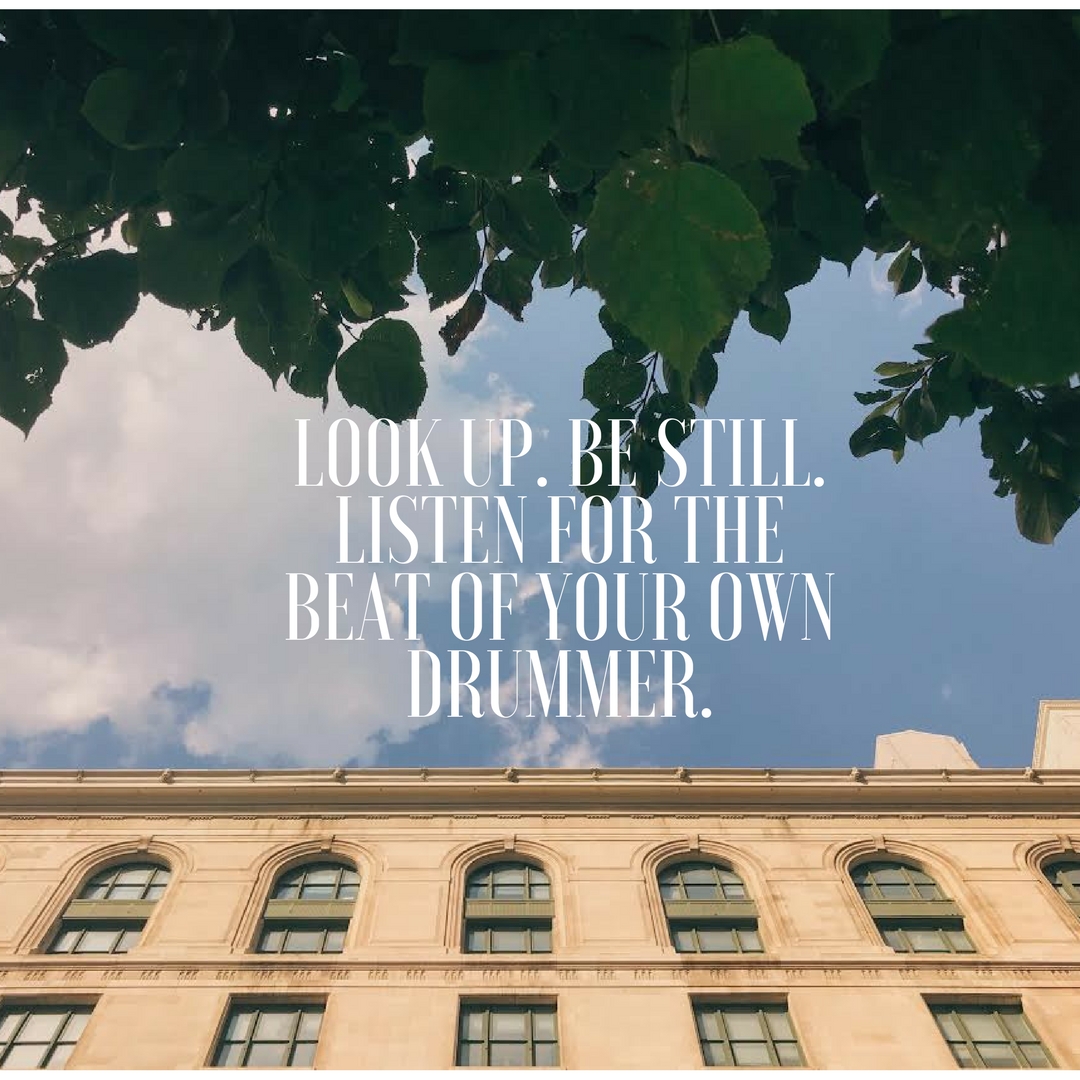
be still and listen to the beatof your own drummer(1)

Ever wondered why your best ideas always seem to arrive in the shower — or while on a walk — or when you first awake in the morning? Well, it is no coincidence. Researchers have known for years that your brain requires peace (& often quiet) to connect the disparate elements that churn behind the scenes.

This is why you experience increased creativity during down time.

With our busy technology-packed lives, we tend to equate feeling busy with well-being. However, your brain may be begging for a bit of boredom. So, make a point to schedule time to be completely quiet.

If your are very still — you may even hear the faint sound of your own drummer.

To learn more — visit our YouTube channel and find the playlist: http://bit.ly/2y0Tans

  • Manoush Zomordi. How Boredom Can Lead to Your Most Brilliant Ideas. Breaking our technology habit can be a challenge. However, it is more about empowerment, than time spent. Zomordi’s, Bored and Brilliant initiative opened the eyes of thousands.
  • Genevieve Bell. The Value of Boredom. Bell educates us concerning how (and  when) the notion of boredom and its negative connotation — developed. She further explores how technology impacts this dynamic.
  • Rollo May. Rollo May on Boredom & Creativity. Existential psychologist Rollo May, questions our use of toys (technology?) to avoid boredom — and how boredom “pushes you toward your own imagination.”
  • Cal Newport. Quit Social Media. The author of Deep Work: Rules For Success in a Distracted World talks about how a lack of social media, has positively impacted his own life and work. He discusses the addicting nature of the medium and what might happen if we would consider leaving it behind.

Read more about this topic:

Dr. Marla Gottschalk writes about life and career as a LinkedIn Influencer. Her posts have also appeared at various outlets worldwide — including US News & World Report, Forbes, Quartz and The World Economic Forum.

Live.Work.Think.Play shares observations concerning a wide array of topics from running a company — to the perfect handbag. It is designed to share lessons learned from a variety of perspectives.

Uncategorized

Big Presentation? Some Tips (From an Expert) About What to Wear

What-to-Wear-for-a-Big-Presentation-at-Work-2
Personal Branding Expert Michele Lando

By: Michele Lando

Public speaking can create stress for most of us. However, it can become even more of a challenge, when you have no idea what to wear. I have years of experience advising in this realm as a personal branding specialist — and I’m here to unpack the challenge for you.

Of course, it is key to appear polished and professional (that is expected). But the secret is to dress in an outfit that makes you feel your best. (Emphasis on the “you”.)

Here are my best tips for what to wear to that next important presentation — either at work or school.

#1: Think carefully about what makes you feel confident

It’s not often that we are intentionally mindful about our clothing. However, a significant part of deciding what to wear for a presentation is identifying an outfit that builds your confidence. In that way, it adds another layer of empowerment to your workplace presence. (Items that really don’t fit or make you feel less than, need to be eliminated from the start.)

Personally, when it comes to work — and honestly I don’t dress much differently when I’m not working — I feel my best when I’m in a blazer, simple blouse and skinny trousers or a pencil skirt. (If you look at the clothing that I discuss, you’ll notice that I’m often wearing some version of this outfit.)

It simply works for me.

This is what I call my personal “power outfit” — because it makes me feel confident — which in turn is reflected in my ability to clearly communicate. Someone else might feel their best in a skirt, perhaps a suit or even dressy jeans. Whatever it is that makes you feel really great (and flatters your body, go in that direction.

Reflect on when you feel your best. Dissect the components and note them.

#2: Remember you have the power to change how people see you

It may sound extreme, but I’ve always thought that clothing could change the world. Why? Because your clothing affects your confidence — and if you feel good about yourself you’ll be able to do good things and put the best version of yourself out into the world. Sometimes it simply takes the right outfit to give you the confidence to get up and do something productive.

It’s really empowering when you realize that you control how people see you and what image you project.

Think about how often we judge people almost immediately based on their appearance (whether correct or incorrect). Clothing is one tool which can help you take control of how people see you and shape their viewpoint.

Do you want to appear as a strong, knowledgeable, and confident individual?  Your clothing can help.

#3: Now — take it up a notch

When you’re contemplating what to wear for that presentation, another helpful rule of thumb is to think about what you would normally wear to feel great and “zhush” it up slightly. For instance, if you typically wear colored denim and a blouse or button down, think about adding on a blazer (a tie for men). Similarly, if you often wear flats and jersey dresses, perhaps opt for a dress with a little more structure and pair it with a slightly higher heel.

Overall, the goal is to highlight how much time and effort you’ve put into the presentation — and this should be reflected in your physical appearance. This moment is important.

That is why dressing more formally than you would on a daily basis is important; it will reflect your effort.

Always, remember that you have the power to craft your personal image.

#4: Follow the third piece rule

I talk about the third piece rule quite a bit at my blog — and this is the perfect place to put it into action. The third piece rule states that every outfit looks more pulled together with the addition of a third piece. If you’re trying to keep your business casual attire professional, wearing a jacket always helps. Your third piece could be a blazer, a jacket, belt, statement necklace, etc. The possibilities are endless, but adding that third piece immediately elevates any outfit. Think about adding some sort of accessory to bring the look together and make it a bit more formal. For men, adding something as simple as a color coordinated belt, or even a fun tie or pocket square can amp up your style. If you need to be more formal but it’s too hot for a blazer, throw on a vest.

A third piece is an easy way to elevate your outfit to ensure that you’re dressing appropriately for that important day.

#5: A confidence basic — ban the wrinkles.

One of my pet peeves, is clothing with wrinkles. Wrinkled clothing simply appears unprofessional. It’s as simple as that. If you don’t like to iron, (I don’t like it either) get yourself a little steamer. Entering the presentation in wrinkle-free clothing is an easy way to ensure that you don’t look like you just rolled out of bed.

The small things do matter.

Let’s sum things up. If you are struggling with what to wear for a big presentation at work. Your hard work should be reflected both in your presentation (you’re going to kill it) and your professional appearance.

Dress in an outfit that makes you feel great about yourself and the presentation you’re delivering.

The rest will be history.

Good luck!

A native San Franciscan, Michele Lando is a Certified Professional Resume Writer and founder of writestylesonline.com. She has a passion for helping others present the best version of themselves, both on paper and in person and works to polish individuals’ application package and personal style. Aiming to help create a perfect personal branding package, Write Styles presents tips to enhance your resume, style, and boost your confidence.

Live.Work.Think.Play shares observations concerning a wide array of topics from running a company — to the perfect gift. It is designed to share lessons learned from a variety of perspectives.


Uncategorized

What Kind of Career Growth Are You Seeking?

edu-lauton-71055-unsplash

In today’s world, career paths have been described as “boundary less”. We build careers and seek fulfillment by collecting varied experiences — across organizations, managers and work content. However, what we are seeking growth-wise at specific points in time will often guide that direction.

Ultimately, we seek situations that offer alignment with our current career vision.

Through years of speaking with individuals about work and career, I have observed combinations of elements (such as change vs. stability) that describe different types of growth “states”. We might flux in and out of these states — depending on our life situation or goals — and none would be considered “right” or “wrong”. Interestingly, some contributors seem comfortable remaining in one state for an extended period of time. while others might shift to meet their evolution.

Here are just a few I’ve observed. Please share any others in comments.

  • Future forward. There is a longer-term passion in the distance. In this state, you may currently hold a role aligned with education and experience — yet there is another career step in your “back pocket” serving as a strong motivator. Whether this entails preparation for a desired pivot or perhaps becoming an entrepreneur, we are building infrastructure for the miles ahead. Gaining skills to ensure the dream becomes a reality is a key imperative. Organizations can contribute by building foundational skills and the opportunities to build networks.
  • Creative calibration. You are primarily happy…but. This trajectory can involve a single direction or path — as long as we have the opportunity to add or delete tasks that meet our need for challenge/creativity. (It’s a bit like a central core with satellites orbiting around it). We might incorporate a flow of industry research or expand our “career mission” to create more interest. Appropriate expansion of the horizon is critical to avoid disengagement. There are multiple benefits for both the employee and the organization.
  • New progressive. You want to break the mold. Literally. While here, you desire to build a new, possibly “morphed” career path, integrating novel or disruptive elements (such as technology) smack into your current area of expertise. We would have the opportunity to allow skills co-exist, that others may never envision together. A high tolerance for ambiguity and exploration, along with a healthy dose of “progressive ambition” coexist — as the steps of this path reveal themselves only as time passes.
  • Steady-state. Healthy stability is the name of the game here. Contributors desire a specific role, while maintaining a strong, singular path for an extended period of time. We are less likely to job hop — but may move along with a specific group of contributors focused or an area of interest. Working on longer-term initiatives is often the hallmark — and contributors find this very satisfying.

Above all, knowing thyself is critical. Individual contributors (and organizations alike) should build awareness concerning how our needs evolve over time.

To explore your growth state needs, ask these questions:

  1. Are you leaning toward stability or change/challenge at this point in time?
  2. Have your growth needs tended to shift significantly over time or have they remained constant?
  3. Recall a time when you were satisfied with your career growth. How did your growth needs align with your role?
  4. Think of a time when you were frustrated, overwhelmed or disappointed with your path. What was happening?
  5. Do you lean towards being proactive or relatively passive, where career growth is concerned?
  6. How might voicing your needs, affect the possibilities?

So — where are you? Have I missed a growth state? Share your story.

Dr. Marla Gottschalk writes about life and career as an Influencer at LinkedIn. Her posts have also appeared at various outlets worldwide including US News & World Report, Forbes, Quartz and The World Economic Forum.

Live.Work.Think.Play shares observations concerning a wide array of topics from running a company — to the perfect handbag. It is designed to share lessons learned from a variety of perspectives.


Uncategorized

It’s a “Wicked” Challenge — But You Can Design Your Life (Yes!)

When I look at a Parsons table (designed at Parsons Paris in the 1930s) — I see a thing of great beauty.

Fresh simplicity.

Lines that sing.

A presence that cannot be ignored.

Grahm+Writing+Desk

Legend has it, the iconic design emerged from a design class where its instructor, Jean Michael Frank, challenged students to design a table that would retain its design integrity sheathed in various materials, such as mica, burlap, etc. From Frank’s sketches and student participation came the elegant minimalist design. (Read more of its history here.)

It was the product of an inspired design moment and is a thing of beauty.

What if we could take the same engine that drove this type of creation — and apply it to our own lives?

What if you could design a life that sings for you?

I’ve spoken to countless people who are less than thrilled with their lives. Something seems off. Something isn’t working. However, the more telling question must be posed — is there something better out there for me? The authors of Designing Your Life: How to Build a Well-Lived, Joyful Life, explore the dysfunctional beliefs that stifle the answer to that vital question. The answer is likely a resounding “yes”.

But how? We are rarely offered the tools to unpack such a problem. But, that is changing.

At Stanford University, students have had the opportunity to explore their life as a design challenge, in a course named: Designing Your Life. The crux of the course involves applying design principles to build a happy, fulfilling, post-student life — prototypes and all. Initially an experiment (the brainchild of the book’s authors Bill Burnett & Dave Evans), the class became such a campus phenomenon within the engineering department — that it was then offered to all Stanford students. (The information is now being shared with other universities – from Harvard to Cal State Dominguez Hills to Trinity College, serving students across the country. That works.)

The most important element of the course is to build a life that holds meaning. What might you want to build or leave behind? That exploration is much more than money — or a job. It is about living a coherent life; congruent with whom you are.

So, this is where the book comes in. It is jam-packed with observations concerning the history of this now 10-year-old course experiment.

Interestingly, the concepts in the book are now being offered to the public in a workshop format and there is one version especially tailored to women. (See the dates below — you can still register). Course instructor Susan Burnett, describes the workshop as perfect for anyone who finds they are at an “inflection point”. Whether that is leaving college, a marriage, job or career, or just being ready to try something new. As Stanford Life Design Lab’s Kathy Davies describes, “the course for women was born from the observation that women engaged with the process with a different perspective. The workshops provide the time, space and a community of support to have those life design conversations.”

Hooray. We all require help with inflection points.

So, pick up the book or register for the course and get ready to break down that petrified view of your life — and then put it back together again.

Only better.

Now do it again.

And again.

What do you see?

Click on book icon to learn more.

________________________________________________________

The Designing ​​Your ​​Life ​​for ​​Women Workshop

Overview: Designing Your Life for Women is an intensive, hands-on workshop experience where you will learn and apply the Life Design© method to your own life.  We will focus on balance and energy, use ideation techniques to help get you unstuck, build Odyssey Plans for three potential futures, and define ways to prototype the compelling parts of these futures. Best of all, you will do this in a community of women who have come together with a common purpose and who will support you on this life design journey.

UPCOMING DATES: Check here for more information.

Dr. Marla Gottschalk writes about life and career as an Influencer at LinkedIn. Her posts have also appeared at various outlets worldwide including US News & World Report, Forbes, Quartz and The World Economic Forum.


Uncategorized

Want to Simplify Your Life? Examine the “Myth of More”

Stress

“Two things define you. Your patience when you have nothing, and your attitude when you have everything.” – George Bernard Shaw

By: Alison Ellison

What does the “Myth of More” look like to you?

If you have you ever thought “more is better” or “two would be better than one?” — you’ve crossed into its territory.

There is an undercurrent to our lives that more is necessary (and needed). However, when it becomes part of our everyday vocabulary, it can quickly complicate our lives; creating an overflow of stress and worry.  I used to fall prey to this myth, secretly looking for ‘more’ in the form of projects, possessions, activities and friends.  Money, promotions, trips, and trinkets had been the object of my affections — in what I thought was a very innocent path.

Isn’t this what I am supposed to want? Isn’t this the American Dream?

When I began asking myself what mattered most in my life — the projects, possessions and titles did not even make the list. So what was I really doing? I woke up to the realization that I didn’t “own” my job or the “stuff”.

The desire to amass more owned me.

I realized that I needed to deal (and banish) the myth and the process was certainly more of a journey than a single “aha” moment. When I actively changed the focus from material desires to more meaningful needs — my life became simple. It felt infused with purpose.

“More” is an operative word that can grip us. Our wants, desires and cravings continue to ramp up. (The myth begins to require more feeding, with increased regularity.)  The endless loop we get caught up in can look like this:

1)   The more we want, the more we desire.

2)   The more we desire, the more we crave.

3)   The more we crave, the more we reach for something, anything to fill that need.

Getting off this roller coaster requires something entirely different. It requires getting quiet — and moving away from the work and digital distractions. It requires solitude. It requires reflection. Put your hand and over the heart and ask, “What matters most to me?” and “What experiences do I want to seek?”

Craving often begins, with a sense that we are missing something — a need. We would like to correct that defect and feel better. Cravings come in many forms (we usually think of food and habits first). However, we should consider other types of cravings as well. Seeking validation from the outside world to feel happier, loved, or approved of, can also be a craving that can direct us to seek “more”.

However, don’t despair. Just as we shift into a counter-productive habit, we can shift into an improved habit. Small steps and consistency are the key.

Try the following — and with practice, you will soon be able to separate the desire for more money, promotions, toys, trinkets, with the desire for more time, connection, resilience and confidence.

1)  Identify what you are seeking. Hint: Seeking is often something outside of ourselves. Be honest. Do you envision a promotion, love, money, travel?

2)  Identify the feelings you would like to come with manifestation. Chances are you are looking for something other than the actual physical manifestation. Could it be possible you desire contentment, connection, abundance, adventure, or joy? It is quite important to connect the desire to the experienced emotion.

3)  Ask yourself if your body, mind, and spirit supports that answer. Does that little voice inside your mind or your intuition have guidance any to offer? If the answer is no, then go back and ask WHY and identify where the desire was born.

Here is one experience with the myth from my own life. During a particularly challenging project, I was feeling extremely anxious and nervous. After some reflection, I realized that I was actually seeking approval for a new idea that I was introducing. To feel more confident, I undertook a relentless quest for research, information, guidance and instruction — so I could validate that the idea was sound. If I just reviewed one more study and provided more, I would satisfy that need for validation.

This lead to overload. That is, until I fought (and banished) the myth. When the scale finally tipped toward overload, it was time to consider who was running the show.  (Learning to listen to my inner voice, helped me.)

While taking a deeper dive into why I was seeking validation, I realized the overwhelming need to race and become an expert. However when I paused, I possessed far more wisdom and knowledge than I gave myself credit. (I was trained and prepared for the challenge.) In this situation, with the desire to prove my project worthy, I became entangled in the motivation to provide more. More time. More energy. More emotion.

Banishing the myth of more is one method to simplify your life.

Letting life and work become simple once again, through the identification of what you are really seeking.

Are there “mores” in your life that should be banished? What is truly behind the need?

Alison Ellison, is a soulful simplicity “strategist”. She writes about ways to shift from a busy, “stressed out” existence — to an authentic “stress-less” soul style. She loves to share methods to let go of chaos and embrace a simpler, more soulful life. Learn more at www.moresoulplease.com

Live.Work.Think.Play shares observations concerning a wide array of topics from running a company — to the perfect handbag. It is designed to share lessons learned from a variety of perspectives.

Uncategorized

Why It’s So Hard to Leave a Job (Even the Ones We Secretly Hate)

laptop on a wooden white desk
Photo by Karolina Grabowska on Pexels.com

Most of us have experienced moments where we struggle to move forward. We may have detected that something vital has shifted — yet we hang on to a role (or a freelance gig or a team membership) that doesn’t really suit us. In many cases, the signals to explore alternatives are completely missed, often overwritten by our dismissive inner monologue.

So we remain. Long after it is time to say goodbye.

After years of hearing stories of roles that do not fit (not to mention, bosses & organizations), I now hold a strong view that the need for change is actually an inevitable occurrence. It is not unlike the coming of the sunrise or sunset; and we should count on it. If we could somehow manage to accept these inevitable impasses as positive — not unlike changes in technology — we hopefully could avoid the shock and somehow move on.

Ultimately, when we find the psychological resources  to move on to seek a better fit — it is often for the best. These are transitions, not sentences after all. If we can accept changes in styles, markets and devices — why can’t we embrace the evolution of ourselves and our own paths?

There are beliefs that convince us to acquiesce control over our work lives and leave things to fate. I’d like to challenge a few of those beliefs:

  1. We are conditioned to “hang on” and forgo risk. Yes, a miraculous “in place” improvement is possible (a bad boss might move on for example). However, forgoing all risk in the short-term can be a hand ill-played. We might fail to acknowledge that the psychological contract (which serves as the baseline for a healthy employee-employer relationship) has already been irrevocably broken. When we remain, we risk being physically present at work — yet mentally absent.
  2. We secretly hope that everything (including ourselves) will remain static. Of course, this belief predisposes us to be unhappily surprised at each and every turn — as change is going to happen. To complicate things further, we are notoriously inaccurate about how we personally evolve over time. (How often do we stop to envision our “future self”?)  Truth: The roles that fulfill us now, may not be the same roles that might excite us five years on. As Daniel Gilbert has shared: Your history does not end today. (Learn more about the “End of History Illusion” in the video below.)
  3. Seeking a role which is more aligned with our needs and strengths is frivolous.  Oh wow. Do not get me started. On some level, many of us think this quest is a “pie in the sky” mantra. So we avoid the entire conversation — and with that neglect, any hope of an improved option. For example, early in our career paths we might feel that we are glued to a role that directly links to our college major. When our needs shift with time, we feel a pivot is irresponsible. Ultimately, much is left unsaid and undone. As the gap widens between who we are and what we do — everyone loses.

We should be ready and willing to embrace how we change.

Moreover, organizations should encourage and facilitate its exploration. This can be accomplished through heightened awareness.

If we do not prepare, I fear we will not be ready for what inevitably arrives.

Our next chapter.

When was the last time you reflected on how you have evolved? Share your observations here.

Dr. Marla Gottschalk writes about life and career as a Top Voice at LinkedIn. Her posts have also appeared at various outlets worldwide including US News & World Report, Forbes, Harvard Business Review and The World Economic Forum.

The Tilbury Edit  shares observations concerning a wide array of topics from running a company — to the perfect gift. It is designed to share lessons learned from a variety of perspectives.

Uncategorized

Beating the Imposter Syndrome

winning

Feelings of self-doubt can plague all of us.

In rare cases, these harbored doubts can threaten to derail our work lives.

The internal chatter and disconcerting “pangs”, can become quite vocal as we approach (or settle) into a new challenge. Actively considering a method to neutralize the negativity, is both worthy and necessary.

There is a name for this dynamic: The Imposter Syndrome. First documented by psychologists Suzanne Imes and Pauline Rose Clance in the 70’s (read the source research here which explains how family experiences can serve as an instigating culprit), it illustrates how high achievement doesn’t automatically translate into a deep sense of confidence. We can harbor experiences that make us feel vulnerable and unworthy. In fact, some us fear being discovered as less than competent (even a “fake”) as we progress career-wise.

When suffering from the syndrome, internal doubt concerning whether an individual is deserving or worthy of success can dominate your thoughts. Research examining this dynamic, recorded greater anxiety levels for those who identified as “imposters” before a challenge and greater loss of self-esteem after a failure. Others examining IP as it affects us career-wise, found that IP decreased career planning, career striving and the motivation to lead — all of which can spell real trouble for development.

You’ve likely heard the urban legend of a freshly minted groups of MBA students at a prestigious university. On the first day of lectures, a professor inquired if they entertained the thought that their acceptance may have been in error. (Surprisingly, the majority of students raised their hand in response.)

They had unceremoniously diminished their hard work and accomplishments to something as capricious as an office error.

Many if us diminish our own successes in this manner.

The truth is this, I’ve been there — and in all likelihood you’ve been there, as well. We must make every effort to squelch the negative inner voice, as it attempts to trump our hard work. In fact, we should unpack the “whys” and “hows” of the syndrome.

Self-managing these pangs is an important task.

Some elements to consider:

  • Challenge the source of your doubt. This a worthy, yet very tough question to answer. In many cases, past experiences are so ingrained in our daily lives that we have forgotten to challenge them. Has an early career failure or unhealthy family dynamic plagued you in some way, for example.
  • Watch the stress of transitions. Feelings of anxiety can accompany new surroundings and periods of uncertainty. Recognize this is completely normal and will likely pass as you become more settled.
  • Challenge the “perfection” trap. Feelings of doubt can be fueled by the penchant to achieve perfection. Try to determine if perfectionist tendencies cloud your judgement concerning your knowledge set, skills and experience.
  • Consider the facts. Take a deep breath and examine the facts. (In fact, sit down and review your accomplishments.) There is likely much more evidence that you are competent, than not. Remember, that an organization chooses to engage you, betting you will succeed — rather than fail.
  • Process setbacks in a healthier manner. Failure is an ever-present possibility — and the greater the challenge ahead, the more likely your protective mechanisms will kick into high gear. Yes, there is a chance that you might fail. However, if all does not go well — be careful to “unpack” the low points without sacrificing your own self-image.
  • Monitor self-talk. What normally dominates your thoughts when you have an opportunity on the horizon? Excitement? Doubt? Negativity? Monitor (and auto-correct) the dialogue marching through your head.
  • Share your concerns. If you have nagging doubts about a specific element of your work life, put the cards on the table with someone with who can offer an impartial opinion. Go there and discuss perceived weaknesses. This may offer you a needed perspective.
  • Still doubtful? Focus on skill building. If you still have a suspicion that you may actually be lacking somehow (even though others may not share that assessment) explore methods to satisfy your inner critic. Carve out strategies to help you feel comfortable and build confidence. (Brush up on skill sets, circulate your ideas for review/comment, etc.) This may do your workplace “soul” a world of good

Read more about this topic:

Live.Work.Think.Play shares observations concerning a wide array of topics from running a company — to the perfect fragrance. It is designed to share lessons learned from a variety of perspectives.