Uncategorized

Why Suits Don’t Always Make the Woman & Other Clothing Tales

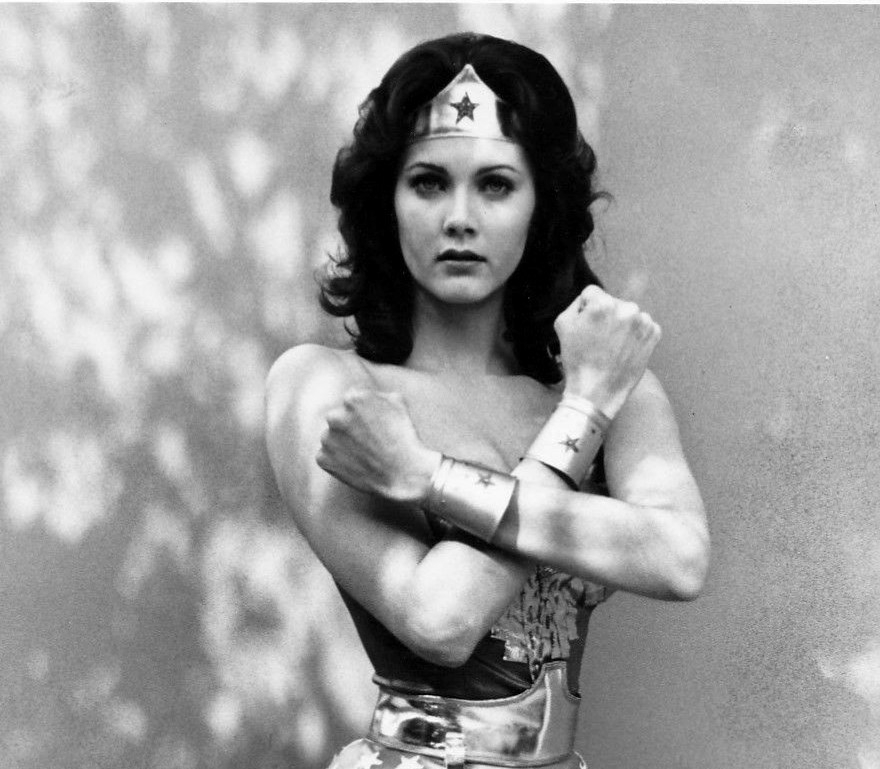
Lynda_Carter_Wonder_Woman

By: Allison McClintick

The other night over cocktails, my friend and I were discussing how clothing can change how you feel. Interestingly, she almost fell out of her chair — gushing over the glorious power trip of a perfectly tailored suit. She smiled slyly at me, sharing her glorious secret; that the suit made her feel like a bad ass.

I really couldn’t share her enthusiasm.

There are few things in life I detest more than wearing a suit. Well, that may be a slight exaggeration. But not by much. What you wear, should be an extension of your personality. If you feel powerful in a suit, it should follow that it fits your personality (and you are not trying to compensate for something else).

The suit “thing” just does not follow for me.

One thing I have learned, when it comes to clothing that helps you feel confident and empowered — it is not a one-size fits all solution.

I have spoken in front of thousands of people. Once or twice, I have been criticized for not wearing a traditional jacket (ironically, by other women). I intentionally stopped wearing them because when I did, I felt uncomfortable — a little like a fraud. I was actually physically uncomfortable, like a child trying to pass as an adult. It totally threw me off.  My brand and my message said something totally different than what I was wearing.

Formal career wear? It just doesn’t suit me. I’ve instead opted for dressy jeans and a much for forgiving form of the “jacket” (No complaints yet. See a couple of anti-suiting options below). I let potential clients know this is how I present myself, from the start.

It is no surprise that formal suiting doesn’t work for me. I’ve been an athlete all my life. I’ve played soccer for 30 years and when exercising, I’m already planning my next workout. I practically live in yoga pants — immediately putting them on when I get home. You can only imagine my euphoria over “athleisure” earning a permanent place in the trend world.

For those of us who are dedicated athleisure fans — we know that it isn’t just a trend — it’s a lifestyle. It represents active living, a casual sense of adventure. I like to think it represents a natural sense of confidence. However like anything, there needs to be balance. In my Atheleisure efforts of yesteryear, I may have looked a bit too casual. In the last few years, I’ve evolved to choose functional, flattering options.

Flattering and functional do cost more — just as it would with a well cut suit. If your mid-weight jogging/errand jacket gives you hypothermia in a rain shower in late June, you’ve missed the mark. Brand up. I have my favorite, classic brands. However, there are many new brands jumping into the mix — many with a social conscience — that will help you feel better about spending $100 to knock around town.

Bottom line: Choose what you wear for every situation with intention. Whether at work or play.

Explore quality options that fit you and serve you well. Be mindful of your contextual expectations; however, compromising your unique brand should not be an option. You won’t feel right, you won’t “seem” right and life is too short to feel uncomfortable.

If you’re feeling the Atheleisure vibe (as I do), I’d like to share a couple of favorite brands to try. Those mentioned, qualify as brands you should love & respect.

Be your own woman. Be yourself. Feel empowered to be you.

Athleta. With a refreshed commitment to sustainability, fair trade and empowering women, Athleta provides a wide array of items that could be worn at work or play. We’ve picked a couple of jacket alternatives. They also have a travel line — that can take you just about anywhere. Find it here.

Athleta Bomber
Athleta Stronger Bomber Jacket


Sweaty Betty.
I love this brand’s versatility and classic sense of style (with an edge). A real plus — they support the Movemeant Foundation, a non-profit designed to address women developing a positive body image.  Find their site here:

SweatyBetty
Enso Cullotes + Simhasana Sweatshirt

Have a favorite athleisure brand that gives back? Share it in comments.

Allison McClintick is a seasoned coach & speaker — specializing in influence and consciousness development. She’s a Mom of 2 (20 years & 6 years), a ridiculously talented house painter, lover of quantum physics and is currently pursuing a PhD in Psychology. To balance all that life, work and play — she’s attempting to “think” more effectively with practiced meditation. She’ll keep us updated.

Live.Work.Think.Play shares observations concerning a wide array of topics from running a company — to the perfect gift. It is designed to share lessons learned from a variety of perspectives.


Uncategorized

Want a Better Career? Examine Your Daydreams

Daydreamjpg

Career exploration really begins within our own imaginations — long before we utter a single word or visit a job site.

The dynamic is often a very quick exercise within our mind’s eye. However, it is a vital step in the career growth process. How we visualize our future matters. When you envision your future. What do you see? An expanded role? Success in that role? Failure?

I happened to be reading an article about mindfulness yesterday — particularly discussions about carving out space between a stimulus that we might encounter, and our reaction to it. (See a discussion of the one-second rule here.) Research has revealed that taking a moment to suspend making a decision, forming an opinion or choosing a behavior, can have a significant impact upon our work lives.

That had me thinking about what we envision as we consider our own abilities or potential in the future.

Conventional thinking tells us that all human beings seek pleasure and avoid pain. Yet, research has shown that our own regulatory focus — or the way we typically approach risk — plays a role. Some of us are more naturally promotion focused and embrace more risk; others choose a safer path and are more naturally prevention focused. (Read more about that here.)

So, when you daydream about other paths, do you dismiss yourself too quickly? Pass over a path that may be fruitful long-term, because of a concern about the risk?

Do you have moments when you consider yourself in a non-reactive way? Moreover, is it possible that a prevention focus holds you back?

We cannot build fantastic career paths, if we cannot fully consider all of the possibilities. Yes, there are inherent risks. However, we can become aware of our reactions to those risks and manage the associated fear.

If you respond with an immediate “nay” when contemplating a pivot or challenge, be mindful of your own natural tendency in that regard. When you pause at that window of possibility — envision yourself succeeding, not drowning — and see what that brings. If possible, be aware of an overactive drive to prevent failure.

I challenge you to hold on to the possibilities just a bit longer.

What steps will you take to help make those dreams a reality?

Do your daydreams help or hinder you? Share your perspective.

Read more about it:

Live.Work.Think.Play shares observations concerning a wide array of topics from running a company — to the perfect gift. It is designed to share lessons learned from a variety of perspectives.

Uncategorized

The Hidden Gardens of NYC’s West Village

Nicole#1jpgBy: Nicole Coffaro

On occasion, walking through the city can be overwhelming.

While there’s truly a plethora of lovely sights — it can also be impossible to walk freely. There are millions of people that just like you, are rushing to their lunch breaks or to be home with their families after a long day. The temporary quiet and solace found while turning down a side street is abruptly terminated by a loud jackhammer and the honk of a speeding car. And you personally can’t blame them.

You respect the fact that there is always work to be done — always somewhere to go.

It’s what makes up who you are, as well. That same need to move forward, is what gives you the tenacity and boldness to step into the center of the world every day and face that day with purpose. But, sometimes, you need to refresh yourself in order to continue giving all that you can.

Finding respite in the middle of such an active landscape is absolutely essential to your personal health.

There are a number of places throughout the city that can serve as the perfect escape — places where you can catch your breath, take stock of where you are, and experience the imperative and glorious gift of gratitude. It’s exactly what your day needs, without question.

These hidden gardens serve as the first Village Secret that we’d like to impart to you. The West Village is full of sweet secrets that color the history and culture of its dwellers, and among the most charming, are these gardens. So, enjoy them, and allow the peace found in them to infiltrate your busy life.

The Gardens at St. Luke in the Fields

Just a hop, skip, and a jump away from the busier parts of the village, this is quite possibly one of the most relaxing places in the entire city. Established in 1842 (the church itself was built in 1821), its five different areas include a bluestone patio, a special rose garden, and trees as old as 100 years. There are plenty of corners and benches ideal for quiet reflection. Swing by Hudson Street to admire and appreciate this gem.

Nicole#1jpg

Nicole#2jpg

Jefferson Market Garden

The Jefferson Market Library is located on one of the busiest street corners in the village, and the garden is right beside it — making it a much needed resting spot right in the middle of chaos. If you’re on the go, running from place to place, this is the optimal stop for a break.

Nicole #4

Nicole#5

Nicole#6
Its gorgeous blooms throughout the year, make it a popular site for weddings, festivals, parties, and other events. During the week, especially, it serves as a hidden delight for those desiring a restful interlude in the midst of a busy life.
Do you know of secret gardens that offer a respite in your busy city? Share your thoughts and write for us.
 
The photos:
Image 1: Mitch Broder’s Vintage New York
Image 2: The Church of St. Luke in the Fields
Image 3: Tales of A Madcap Heiress
Image 4: Andreas Komodromos/Flickr
Image 5: openhousenewyork
________________________________________________________
This post originally appeared and was discovered here.
Nicole Caffaro resides in NYC & works in the west village at Noah Waxman — a luxury shoe brand rooted in timeless design and craftsmanship. Find their website and company story here.
________________________________________________________
Live.Work.Think.Play shares observations concerning a wide array of topics from running a company — to the perfect fragrance. It is designed to share lessons learned from a variety of perspectives.
Uncategorized

Didn’t Take That Vacation? Here’s What Might Happen

Mackinac
The Grand Hotel – Mackinac Island

We didn’t have the opportunity to take a vacation this summer.

For some reason, the stars just didn’t align.

A few things contributed to the situation. I have a new role (along with my other commitments) and we are also renovating an older home. (As you might expect, our resources have been diverted to goals such as staircases and a functional HVAC system.) Then we just couldn’t agree on when and where to go.

“Re-charging” just was not in the cards.

The outcome of this neglect feels very real. A little like pulling an all-nighter — with no desire to sit for the exam.

The research has shown that many of us fail to take time off, even when we have earned vacation days to do so. For some odd reason, we don’t like to admit that time off is necessary — or we fear we’ll look weak — or uncommitted to our work. This lack of attention to rest, is costly in so many ways. I can only say, that if I’m representative of what it is like to not have a break, no one should skimp.

Sustaining “us” — is in part our own responsibility. We shouldn’t need to be reminded that we are important.

Here’s what has happened:

  • I’m observing signs of burn-out. Yes, I lack my usual level of enthusiasm for the tasks I normally love. I’ve resorted to coaching myself to care, as the “Joy Factor” has taken a dip. That’s a sad commentary.
  • I’m losing my sense of humor, especially where work is concerned. I don’t laugh nearly enough — and laughing is vastly under-rated. We need these moments to off-set stress.
  • I’m a bit of a pain in the a##. I’m sure it has to do with the above. No further explanation needed. Sorry for the implied language.
  • Inspiration is waning. In my role new sources of stimulation helpful to stay at the top of my game. A change of scenery always does great things for me. We really shouldn’t expect to be at our best, after completing a year-long “Stay focused” marathon.
  • I’m starting to fantasize about a new career. Many of us take these feelings as a sign that our role is the problem. It’s likely not.

Here is what I’m doing:

  • I’m exploring my local environment. I’m unchaining myself from my desk and getting out there (cell phone muted). I’m stopping by the Farmer’s Market, and checking out the museums and gardens (See examples here and here). Inspiration is really all around us.
  • I’m aiming to meet more people face-to-face.  I’m completely inspired by the career journeys of others. I’m making a point to visit college campuses this fall, to talk to students about their future work lives. (let me know if you’d like me to visit yours.)
  • I’m exploring a series of shorter weekend trips. Nothing works like the real deal. Michigan is beautiful in the fall and I’m determined to see it.
  • I’m telling founders, managers and leaders to take their vacations (and to let everyone know.) Nothing cements a needed change more completely, than a strong message that time off is a respected practice.

You still have time to schedule that break.

Do it.

What are your strategies to take a break when vacations are impossible to schedule? Share your thoughts.

Read more about it:

This post was originally posted at The Office Blend.

Live.Work.Think.Play shares observations concerning a wide array of topics from running a company — to the perfect fragrance. It is designed to share lessons learned from a variety of perspectives.

Uncategorized

Time For a Playlist About Building Your Personal Brand & Voice

networkingjpg
Flickr

Thinking about developing your personal brand? Well — we’ve been thinking about that as well. From collaboration opportunities to finding the right role, capturing the core of you, is tantamount. This Playlist is designed to glean the best advice and set you off on the right foot.

There is a rundown of this week’s featured playlist — Developing Your Brand & Influencer Voice below. (Let us know you find our picks helpful by subscribing!) Find it listed under “Playlists” at our newly minted YouTube Channel. Here’s the link: https://www.youtube.com/channel/UCPobAd0urxAGPaVu4PNWsIQ.

Cynthia Johnson, How to Build Your Brand and Influence. One of our great editors, Cynthia Johnson shares sage advice about how brand authenticity and purpose live at the core of your personal brand. (Stay tuned for her upcoming post on the topic.)

Kelsey Raymond, The Future of Content. Kelsey, a founder at Influence & Co. explains how content can be powerful communicator — transmitting brand information with a powerful punch. One piece of advice? Speak to personal experiences if you’d like to influence others (and shift mindsets).

Gary Vaynerchuk, How to Build Your Brand, Think Bigger and Develop Self-Awareness. Vaynerchuk delivers a quick paced synopsis, concerning how to build influence through a social media footprint. But, he delivers a great piece of surprise advice (jump to 7:15 ) — pick the medium that fits you. If you don’t feel comfortable in front of the camera, this is absolutely not a deal breaker. Move on to what suits you and your message (think blogging, Medium and podcasts).

Building Your Brand Through Social Media, Stanford Business School. The iconic biz school fills us in on how social media shapes our brand — whether you are a student or an established professional. Delivered by their own students, the perspective is refreshing.

Tom Peters, Tell Stories. This game changing author, wrote the now classic 1997 Fast Company piece The Brand Called You. His acknowledgement that individuals have their own brand — and there are specific building blocks to do so — was an eye opener. The best thing? He has published a whole series of short videos on this topic.

Read more:
Malcolm Gladwell, The Tipping Point. You cannot talk about brand or influence, without touching on the notion of how ideas, brands (and people) become sensations. Gladwell shares his perspectives on how contagion begins. His story of the resurgence of Hush Puppies is fascinating.

Cynthia Johnson, Platform. Finding your voice is a personal journey. This information packed primer helps you set the tone.

Live.Work.Think.Play shares observations concerning a wide array of topics from running a company — to the perfect fragrance. It is designed to share lessons learned from a variety of perspectives.

Uncategorized

Struggling to Connect? The Beatnik Movement Offers a Simple Clue

943941b8e929f2b2803b443f3ac0f350--beat-generation-jack-kerouac

By Allison McClintick

At 16, I began a love affair with the beatnik movement.

Inspired by the ghosts of Henry Miller, Jack Kerouac and Allen Ginsberg, my friends and I wandered unwashed around downtown Detroit with backpacks and Doc Martens. Nights filled with Henry Rollins, open mic poetry slams, exotic tea in dark, dirty coffee houses and Black & Tan’s in darker, dirtier bars than we should have been able to frequent.

I loved how the legends of angst could bring everyday life “home” to the seeker in all of us. Just recently, I read an article in Lion’s Roar magazine interviewing Gary Synder; poet and author (and possibly inspiration for Kerouac’s On the Road). He was asked about being a Westerner traveling in foreign lands — and the inherent challenges that posed. His simple answer on the topic was the following:

“As long as you speak the language and have good manners, you can go anywhere.”

Beside the obvious literal reference — I was struck by the profound meaning this statement can offer concerning both communication and connection.

Everyone is coming from somewhere.

Their experience and perspective could be similar or vastly different from yours or anywhere in between. However, if you really intend to connect with someone — you must understand who/what/where/they are. Assess their context. To effectively communicate you must be aware of and speak the language of their “world”.

As a coach who helps other build influence, I find that “people complaints” are often hot topics of discussion. Where as you might guess, problems with communication are a common offense. While most people understand they could improve this skill — more often than not — they reflexively point to other people as the culprit when signals get crossed.

What I have observed is that while we may believe that we are communicating clearly, we may not be “speaking the same language” as the individual. This includes failing to appreciate the context of their words and actions.

As an example, one of my clients is a project manager for a large construction firm — he’s a detail oriented, organized, efficient and forward thinking individual. He is also, however, a little rigid, micromanaging and reluctant to delegate. He is struggling with issues with a long-time contractor who is excellent at his job and close to retirement. Needless to say, the contractor functions on his own timeline (and this is usually met with great results).

However, in this case urgency was an issue for my client. And urgency wasn’t a language this contractor spoke. Pressing him for updates and detailed time-lines, only exacerbated the conflict. It didn’t compute with his own “context”.

To meet this issue, my client thoughtfully scaled back his requests and attempted to meet the contract “where he was”. Although the final results were not perfect, things did improve.

Try the following when you are challenged with differences in context:

  1. First, know where you are really coming from. If you don’t know yourself — you cannot listen non-judgmentally to others. Knowing yourself requires that you are aware of your triggers, passions, your biases and how you generally communicate. This is a TALL order. However, if you aren’t aware of all of the above, you’ll have a rougher road to travel. Pushing your own agenda rarely works, when you are struggling to find shared ground.
  2. Ask questions to determine what language they are speaking. The art of inquiry is priceless. Unfortunately, it occurs far less than necessary. I train and coach hundreds of people a year and when we examine how many questions they are really asking, everyone is stunned to learn that they really aren’t doing this enough. The only way to know what language someone speaks, what framework they use to make sense of data, is to explore it. The only way to explore? Ask questions.
  3. Pose questions based upon active listening. Active listening is anything but passive. When you are listening with intention, you should be working to really hear what someone is expressing. From there, the questions you ask should be aimed to capture their “language”(perspective) so you can find what you need to make things happen.
  4. Drop the ego. Ego isn’t welcome here. When you determine the language someone is speaking — you may find it isn’t yours. When this happens, your defenses could threaten to rear their ugly head and spoil the process. When we learn someone’s perspective, we might find that we don’t like or agree with it. Apply wisdom and do not judge. This means refraining from generalizing, accusing, assuming, shut-downs, tangents, “talking at”, writing off, marginalizing, projecting, scape-goating or attacking.

Connecting with people can be complex. However the way through can be simple. You must be willing to do the internal work.

If you’d like some help in this regard — look for me in my beret, clutching my weathered copy of Howl and smoking a Clove cigarette.

Snap! Snap!

Live.Work.Think.Play shares observations concerning a wide array of topics from running a company — to the perfect fragrance. It is designed to share lessons learned from a variety of perspectives.

Allison McClintick is a seasoned coach & speaker — specializing in influence and consciousness development. She’s a Mom of 2 (20 years & 6 years), a ridiculously talented house painter, lover of quantum physics and is currently pursuing a PhD in Psychology. To balance all that life, work and play — she’s attempting to “think” more effectively with practiced meditation. She’ll keep us updated.


Uncategorized

The Everyday Guide to Work Spaces: Make It Your Temple

Photo by u90b1 u97ec on Pexels.com

I have a lovely, vintage painting of an Italian countryside near my desk.

I find myself glancing at it frequently during the day. In the foreground there are olive trees and a group of children running up a hillside. In the distance, you can see the blurred outline of a small village amidst the mountains. The painting is an integral part of my workspace. Somehow it inspires me. I can’t say exactly how or why, but it takes me to a place beyond the walls of my home office. The painting functions somewhat like a contemplative garden — or temple — helping me to focus.

I have seen quite a few uninspiring work environments over the years. When I enter a client space that is dark and drab or cluttered and chaotic — I actually begin to feel their overwhelm. I always imagine those working there, feel somewhat the same way. Many of  them expressed they found it difficult to focus and become productive and that is not at all surprising.

There was no energy or joy present.

The practice of ignoring the physical aspects of where you work is not a wise one, as our workplace surroundings do affect us. Ultimately, work environments should be considered quite carefully. The space should function like a temple — focusing deep respect and care toward our work.

Your space reflects who you are and the importance of your work. Here are “temple” elements you should incorporate into your work space:

  • Peace. Work environments should be calming — not mired with endless drama or negativity. There should be at least one dedicated space that is quiet, so you have the ability to hear yourself think.
  • Simplicity. Office environments should be streamlined, with as little meaningless clutter as possible. It helps to be somewhat organized. You should be able to find important items when you need them.
  • Symmetry. Visual components which include symmetry can add a feeling of balance to your work space. You can group pictures or objects into pleasing patterns; you may find this soothing during hectic times.
  • Inspiration. Just as temples can bring moments of inspiration, your workspace should also be energizing. Fill your work environment with people, conversation and visual cues that help you feel positive and successful.
  • Respect. At the core, your space should convey the respect you hold for your work and what you have set out to accomplish. Your surroundings should celebrate not only your past, but where you are headed.

Is your workspace a temple? Tell us how and why.

Live.Work.Think.Play shares observations concerning a wide array of topics from running a company — to the perfect scent. It is designed to share lessons learned from a variety of perspectives.

Uncategorized

The Everyday Joy of Collecting

Silver_box_collection Photo: Wikimedia

Jerry Seinfeld has a spiel which includes the following observation: “We are all just filling in the gaps of life. We’re killing time. There is a lot of dead air.”

If you do have any modicum of spare time to spend, you’ll want to use it wisely. One great way to fill that time is to collect — and what you collect is not nearly as important as how the process of collecting makes you feel.

Over the years I’ve seen 101 types of collections, from 1rst edition books to Pokemon to antique silver spoons to sea shells. While I know little about all of the sub-types, I surmise that they all bring joy to their owners. (My father refurbished vintage Victrolas and the associated records. It was on one of these that I first heard Enrico Caruso sing Pagliacci.) I now realize, that the activity of collecting was a welcome counter-balance to his role as a physician.

Collecting can provide balance & order for many of us — it can link us with the past and offer a deep sense of satisfaction.

Why collecting is enjoyable isn’t a mystery. Here is what collecting can offer:

  • A sense of mastery. Learning something new is always high on the hit parade of things you should be doing. Becoming well versed in a new area, can engage your mind and boost your mood.
  • Community. When you collect —  you will inevitably meet other people who collect. What could be better than exchanging stories about a rare item or a great new source.
  • Fun. The enjoyment that goes with the hunt for that perfect piece, is probably one of the higher points of collecting. The great thing? You never know when or where that piece will turn up.
  • Sharing. Displaying a great collection is an added bonus to collecting. You’ll create opportunities to discuss the where, why and how of your efforts.
  • Memories. Objects can connect moments and keep them alive in our minds. It is as if what we are experiencing, becomes frozen within the item.
  • Income. In some cases, collections can evolve into profitable businesses. The passion behind the collection can drive you to help others do the same. With sites such as Ebay, there is likely a market for your items. (More options to sell your items here.)

I’ll have to add, that as Jerry Seinfeld expressed about “filling that dead air” — collecting does a pretty fine job.

Do you collect? What has collecting brought to your world? Share what you collect in comments.

Live.Work.Think.Play shares observations concerning a wide array of topics from running a company — to the perfect fragrance. It is designed to share lessons learned from a variety of perspectives.

Uncategorized

Need to Boost Your Creativity? We Have a Playlist for You!

kris-chin-343494-unsplash

We all need a creativity “jump start” from time to time.

At live.work.think.play. we’d rather you didn’t stare at that blank screen or piece of paper, unsupported. So — we’ve pulled together a playlist that may help you understand why you could be struggling.

There is a rundown of this week’s featured playlist below. Find it listed under “Playlists” at our newly minted YouTube Channel: https://www.youtube.com/channel/UCPobAd0urxAGPaVu4PNWsIQ.

Let us know what you think of our picks.

Creativity & Inspiration Playlist:

Huub Koch, 29 Ways to Stay Creative. This quirky visual story, tells us that where creativity is concerned — sitting at our desks is likely not the way forward.

Elizabeth Gilbert, Your Creative, Elusive Genius. In this fantastic TED Talk, Gilbert discusses the perceived dangers of making a living with creation. We find her talk to be both humorous and inspiring.

Elizabeth Gilbert, Success Failure, and the Drive to Create. J.K. Rowling is not the only prominent writer to face failure. Being a “creative” is a long and grueling road — and how we deal with both failure and success is vital.

Simon Sinek, Start with Why. Most often discussed in business circles, Sinek’s notion of “why” — gets to the core of how the greatest of creators actually create. Hint: It is all about perspective.

Ed Catmull, Overcoming the Forces That Stand in the way of True Inspiration. The force behind Pixar (yes!) discusses how we can stand in the way of our own creativity — and how he helped his own team move beyond that struggle.

Read more about this topic:

Have a possible addition to the playlist? Leave your suggestion in comments.

Live.Work.Think.Play shares observations concerning a wide array of topics from running a company — to the perfect fragrance. It is designed to share lessons learned from a variety of perspectives.

Uncategorized

The Everyday Guide to Putting Yourself First: Protect Joy

Joyful

Self-love, my liege, is not so vile a sin, as self-neglecting. – William Shakespeare, Henry V.

We rarely reinforce the idea that putting ourselves first is a healthy practice. We might reflect on what that might look like. Rehearse what we might say or do. We may have even explored practicing self-love or even becoming more selfish. Yet somehow, putting ourselves first escapes us.

Well — it could be that our starting point poses the problem. In this case, we need to stop thinking big and start thinking small. To put ourselves first, we must identify our own personal sources of joy. Secondly, we should protect that joy at every turn.

My father would frequently mention the brilliance of the “small things” in life. He would also contend that milestones (in contrast) were much fewer and far between. In retrospect, he was trying to teach a vital lesson concerning joy. The little things in our lives can also bring joy and satisfaction. (He frequently shared his passion for listening to Deutsche grammophon recordings. The Overture of 1812 will always be quite memorable.)

The small things are worth the time we devote to them.

These moments are approachable.

They are attainable.

They are sustaining.

None the less, we let life encroach on these discoveries. We forget them. We fail to indulge in them. It’s almost as if we grant permission to spoil the ending of every great book or movie. You have to protect the joy to come.

I challenge you to make space to put “you” — and put those small things first (in both life and career). Carve out room to include the elements that might bring everyday joy to your world. This is not about ignoring your tasks or responsibilities. It is simply about recognizing a responsibility to yourself.

So.

  • Protect the roots of joy in your life — wherever and whenever possible.
  • Recognize (and discern) the importance of the small things. Revel in the joy of a good laugh, your YouTube playlist, or a great New Yorker cartoon.
  • Play to your strengths. We have plenty of opportunities to focus on weaknesses.
  • Value your time. Say “no” if you mean to say “no”.
  • Have lunch with someone that always sees the very best in you.
  • Leave behind those that choose to misunderstand you.
  • Align your work with where you wish to be.

Be fierce. It’s alright to put you first.

Now, go ahead.

______________________________________________________

What are the small things that bring you joy?

_______________________________________________________

Read more on the topic:

The Happiness Project by Gretchen Rubin: http://gretchenrubin.com/

The Miraculous in the Mundane, Brain Pickings.

Happiness Habits That Will Make You Thrive at Work, by Jennifer Moss.

Work On Yourself First, by Donna Stonehem,

Live.Work.Think.Play shares observations concerning a wide array of topics from running a company — to the perfect fragrance. It is designed to share lessons learned from a variety of perspectives.